

Last updated October 31, 2026
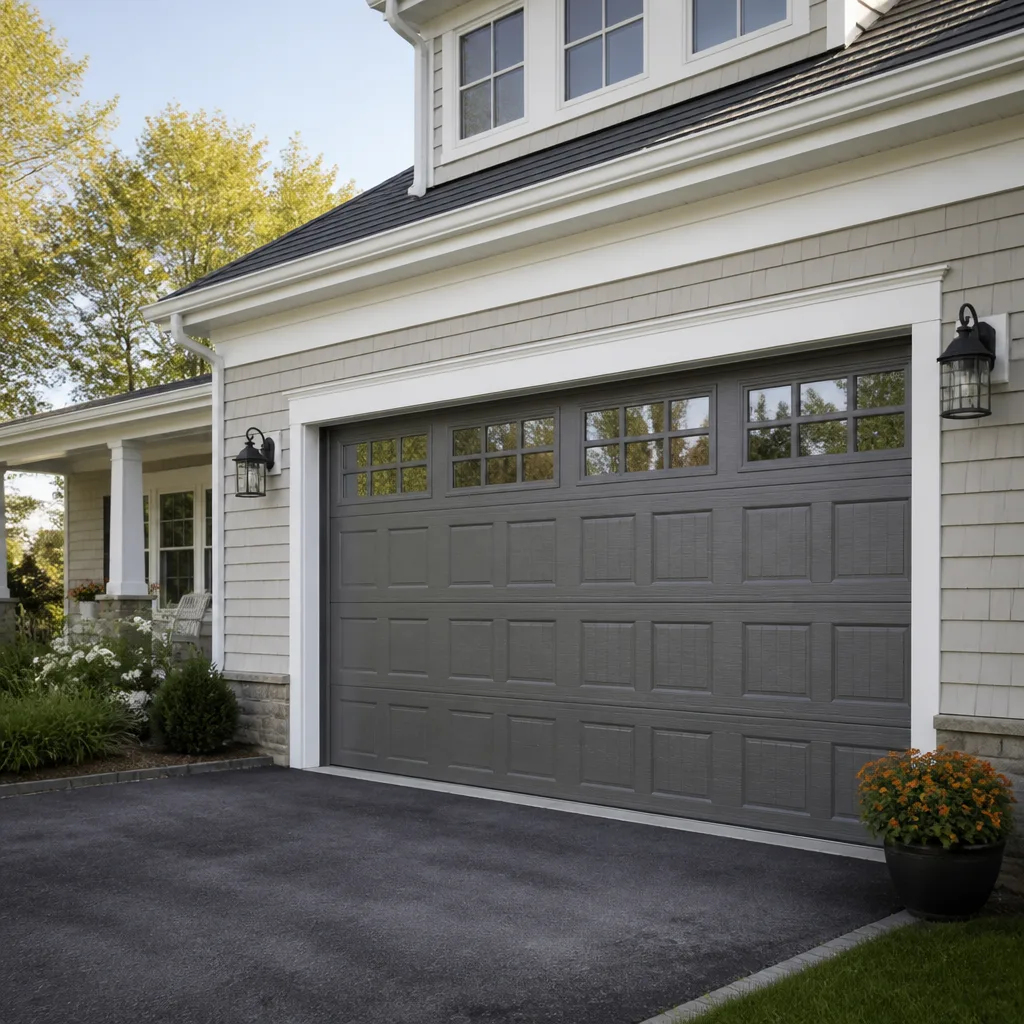
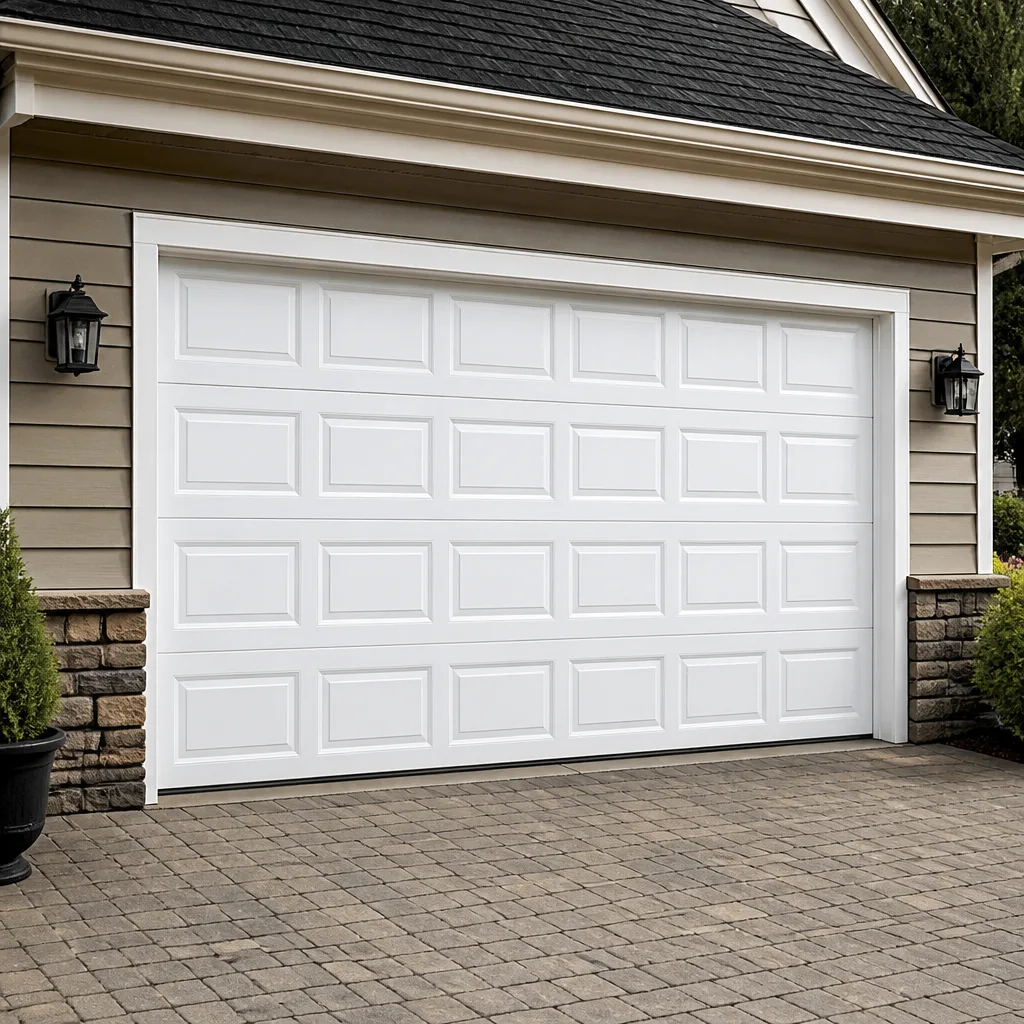 Raised-panel steel
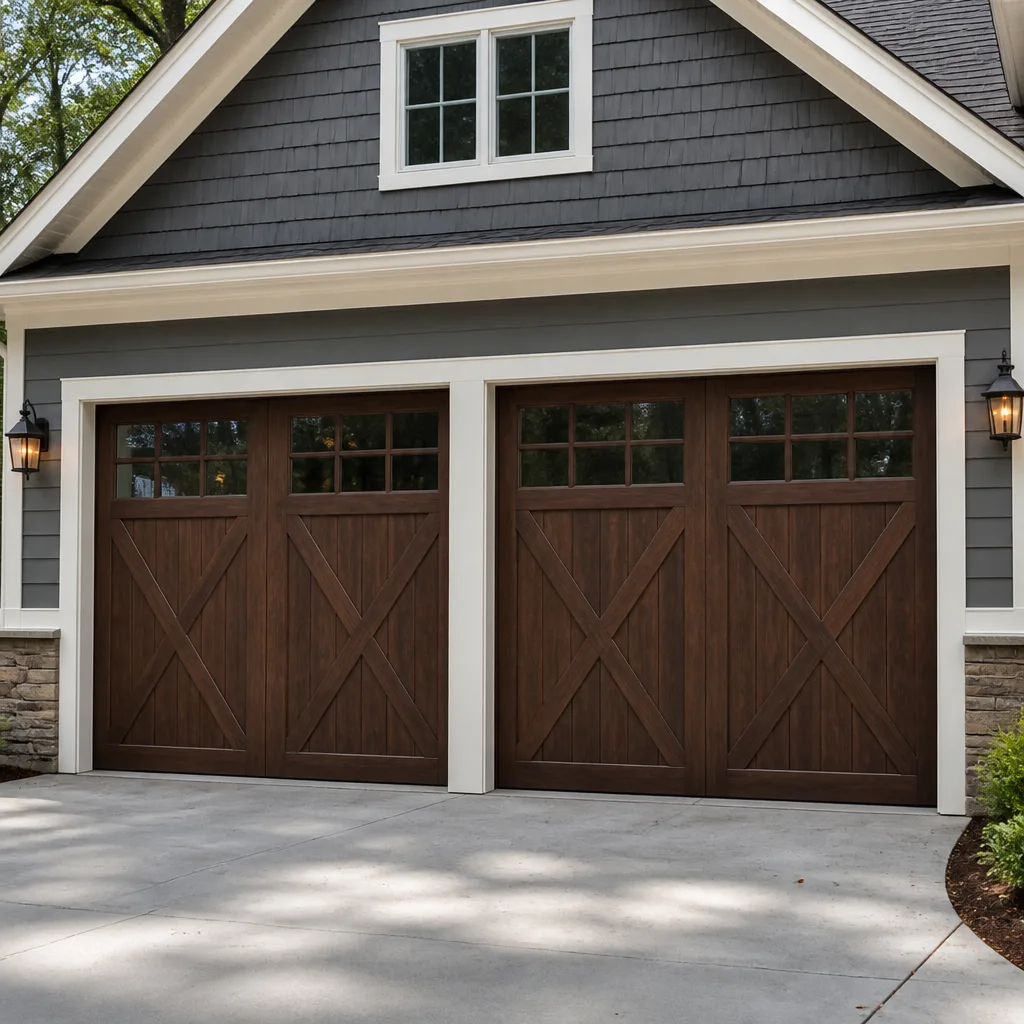 Carriage house
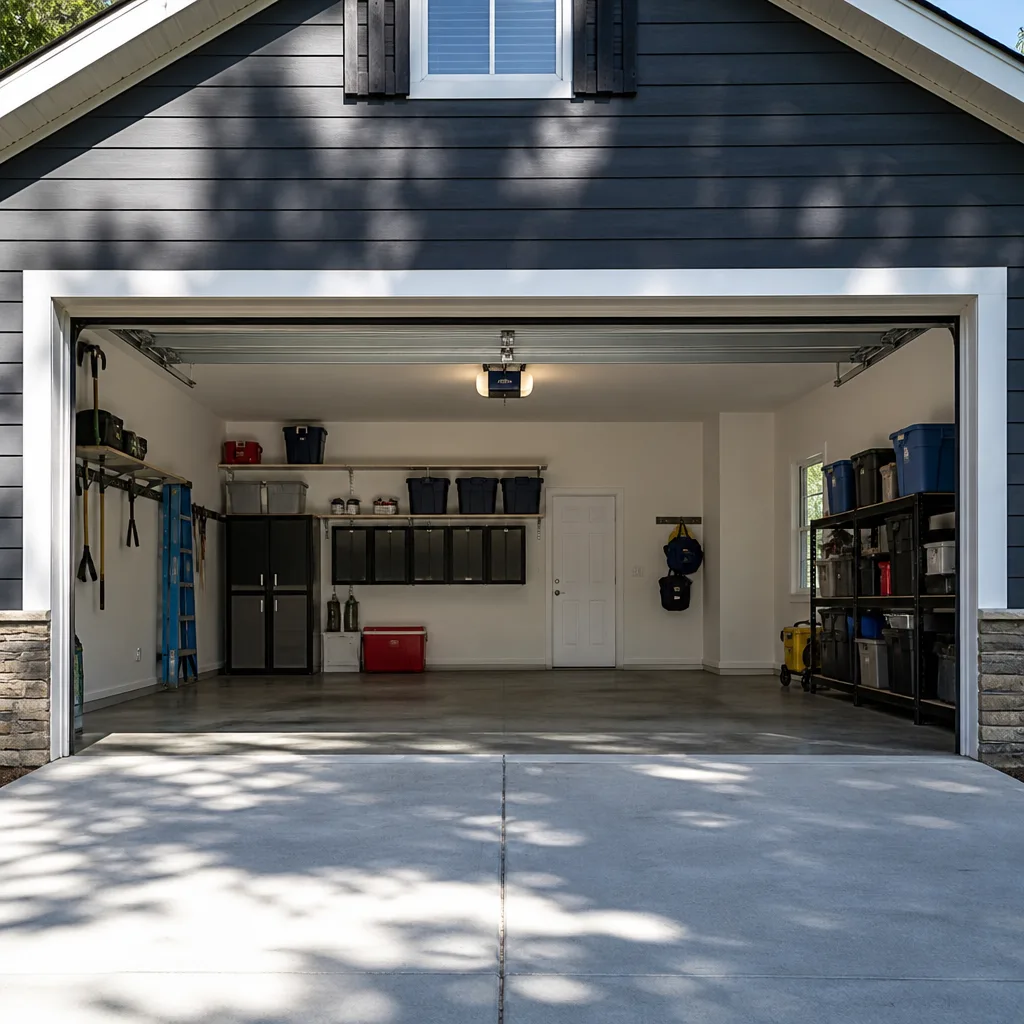
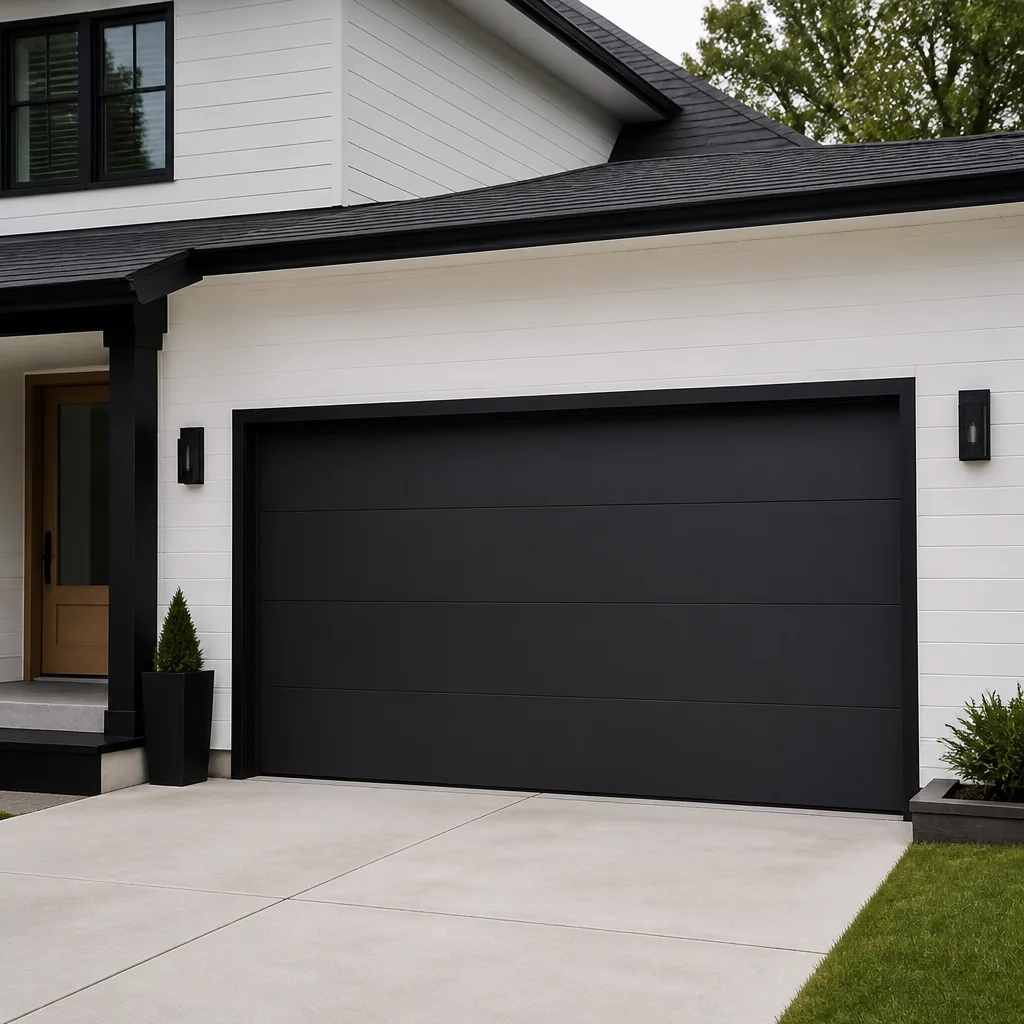 Modern flush
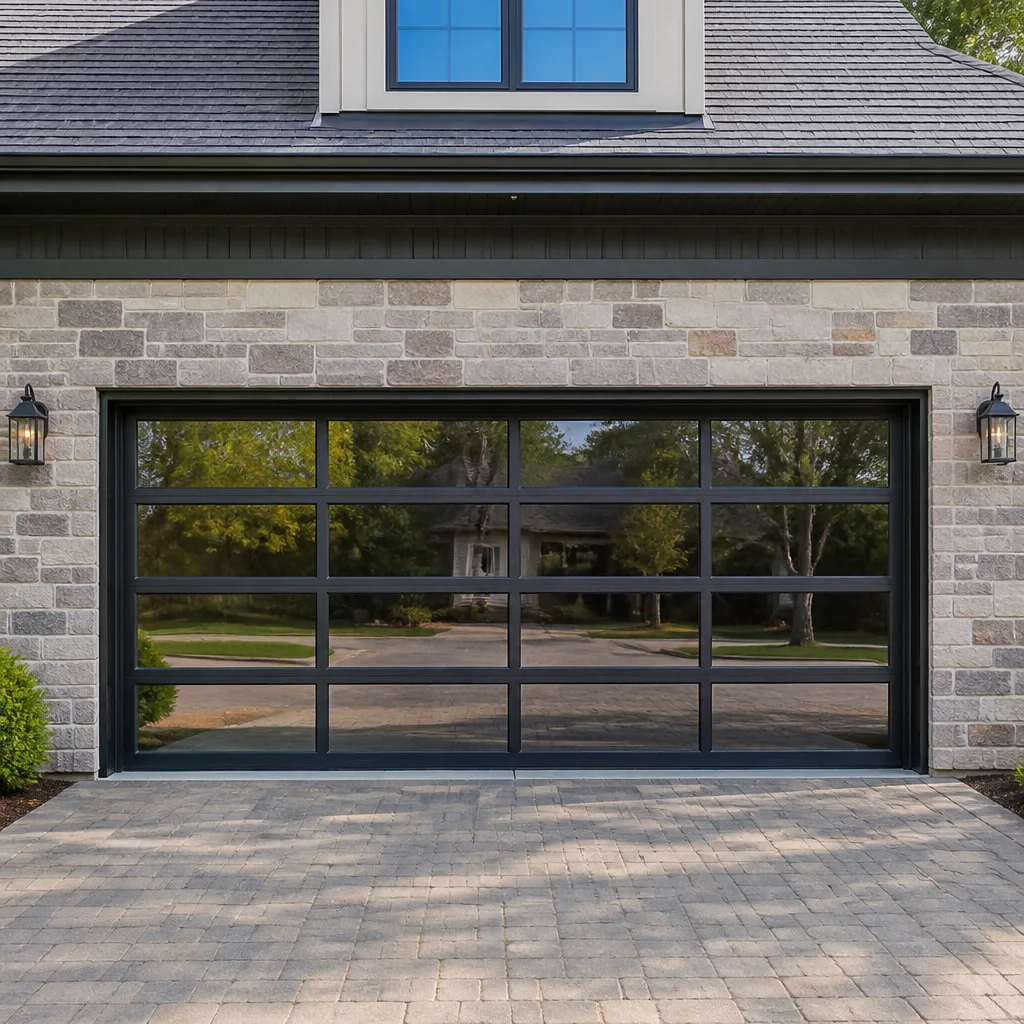 Full-view glass
 LiftMaster openers
 Chamberlain openers
Full 25-point door and opener safety check with every visit - springs, cables, rollers, tracks, and your LiftMaster or Chamberlain opener included
You get a price before we start. It does not change when the truck arrives.
Get your free estimateThe Complete Guide to Garage Door in Pasadena
Most Pasadena homeowners replace a garage door once, maybe twice, in the decades they own their home. So when a door fails early or a new one underperforms, the cause is rarely obvious. The truth is that Pasadena’s particular mix of 1920s Craftsman bungalows, hillside lots above the Rose Bowl, and the dry Santa Ana wind seasons creates specific garage door challenges that national guides gloss over. A surprising number of garage door replacements in this city fail within three years, not because the product was defective, but because the door was specified for a different climate and a different house type entirely. We wrote this guide to correct that. By the time you finish, you’ll know what actually matters for a garage door in Pasadena: which materials survive the heat, which openers fit older garages, what wind load means on a hillside, and when a repair is smarter than a replacement.
Quick Answer
A garage door in Pasadena must be selected and maintained for three local realities: dry heat that warps thin wood, Santa Ana wind gusts that stress older springs and tracks, and housing stock built between 1910 and 1975 with non-standard opening sizes and low-headroom configurations. The most reliable approach is to match the door material and opener system to the specific era and lot type of your home, and to work with technicians who understand the brands installed across Pasadena’s neighborhoods. Stonewall Garage Door Repair handles the full lifecycle, from emergency spring repair to full installed systems, across eight major manufacturers including LiftMaster, Genie, and Clopay.
Styles & brands we work with
Table of Contents
- Pasadena’s Climate and What It Does to Garage Doors
- Pasadena’s Architectural Eras and What They Demand From a Door
- Wind Load Requirements for Foothill and Hillside Properties
- Opener Clearance and Voltage Problems in Older Pasadena Garages
- Wood vs. Faux-Wood in Pasadena’s Dry Heat
- The Repair vs. Replace vs. Opener Upgrade Decision Map
- What Brand-Specific Knowledge Actually Gets You
- Common Mistakes to Avoid
Pasadena’s Climate and What It Does to Garage Doors
Pasadena sits roughly twelve miles from the Pacific, but the climate behaves more like an inland valley than a coastal city. Summer days regularly pass 95°F, with stretches above 100°F in July and August. Humidity stays low. Then autumn brings the Santa Ana winds, which barrel down the San Gabriel Mountains through the Arroyo Seco and hit the foothill neighborhoods with sustained gusts that can exceed 50 mph. Neither of these conditions matches the mild, salty, humid environment that many garage door products are tested against.
What does this mean day to day? Steel doors with thin insulation hold up fine, but painted steel absorbs heat and can make a garage unusably hot by mid-afternoon, especially on west-facing walls in neighborhoods like Madison Heights or Oak Knoll. Wooden doors, particularly those with solid panel construction, dry out and contract. We regularly see gaps opening at the seams of wood doors that were installed tight. Then the first strong Santa Ana event of the season catches a panel edge like a sail, and the door jumps a cable or bends a track. None of this is a product defect. It’s the wrong material for this specific microclimate.
Pasadena’s Architectural Eras and What They Demand From a Door
Pasadena is a city of distinct building periods, and each one dictates a different garage door geometry. If you buy a door based on photos alone, without accounting for your own house’s era, you’ll likely end up with something that fights the architecture rather than fitting it. The three dominant eras each tell us something about what belongs on the house.
Craftsman Bungalows (1905-1930)
The Craftsman homes in Bungalow Heaven, Garfield Heights, and parts of south Pasadena typically have detached or semi-attached garages set back from the house. These garages are usually narrow; many of them were built for a single Model T or a small roadster. Door openings are often 8 feet wide rather than the modern 9 or 10 feet. That means every modern replacement is a custom job, not a stock pull from a warehouse. Craftsman aesthetics call for recessed panels, visible wood grain, and restrained hardware. A flush steel door looks wrong on a 1920s bungalow. A carriage-style design in faux wood fits. The key is matching the panel pattern to the window muntins on the house itself.
Mid-Century Modern (1945-1975)
The post-war expansion produced the ranch homes and modest modern boxes that fill much of northeast Pasadena, Hastings Ranch, and the streets north of the 210. Garages here are attached, face the street, and are wider than the Craftsman era. Mid-century homes look best with flush or nearly flush door faces, long horizontal lines, and muted colors. A raised-panel door with decorative handles fights the architecture. A clean slab door in a warm neutral works. These garages also tend to have the most usable headroom, which makes them friendlier to modern side-mount openers, but many still have aging electrical panels that need attention before a smart opener can be installed safely.
Spanish Revival (1920-1940)
Spanish Revival homes appear throughout the San Rafael Hills, Linda Vista, and the older streets around the Langham Huntington hotel. These houses have heavy stucco walls, tile roofs, and often a garage integrated into the base of the home or tucked behind an archway. Doors here should echo the building’s mass. Dark wood tones, iron-look hardware, and arch-top door shapes work well. Lightweight aluminum doors look out of place. The heat absorption of darker doors is a real concern, so specify an insulated steel core with a wood-look finish rather than solid wood, which will bake and crack within a few seasons.
For a deeper look at how these choices play out across the city, read our guide to Garage Door Installation in Pasadena.
Wind Load Requirements for Foothill and Hillside Properties
If you live north of the 210, in the San Rafael Hills, above the Rose Bowl, or anywhere with an unobstructed view of the San Gabriel Mountains, your garage door faces a structural test that flat-lot guides don’t mention. Our Garage Door Emergency Preparedness Guide for Pasadena Homes covers what to do when wind damage strikes. The Santa Ana winds are channeled through the canyons and hit hillside exposures with enough force to push an unbraced door inward by several inches. That flex pops rollers out of tracks and can fold a single-layer steel door like cardboard.
Building codes in California require garage doors to resist specific wind pressures based on location and exposure. In practice, hillside homes often need a door rated for higher wind speeds than the standard product sold at big-box stores. The difference is in the internal bracing, the thickness of the steel or composite layers, and the number and placement of struts. A door that holds up fine in Alhambra or South Pasadena may not hold up on a ridgeline in Altadena-adjacent Pasadena. If you’re replacing a door on a hillside lot, ask specifically about the wind load rating. If the salesperson can’t answer, you’re talking to the wrong company.
The same logic applies to repair. When we service doors in hillside neighborhoods, we see spring failures concentrated in the same months as the first hard Santa Ana events. Older springs lose tension gradually, and the first windstorm of the fall is often the event that finally snaps them. A spring that’s been quietly degrading for two years suddenly gives way on a windy Tuesday in October. A pre-season visual check can catch that before it becomes a no-open emergency. Read more about what that service involves on our Garage Door Repair in Pasadena page, or start with the overview on the Stonewall Garage Door Repair home page.
Opener Clearance and Voltage Problems in Older Pasadena Garages
The garage doors in Pasadena’s pre-1960 homes were not built for ceiling-mounted openers. They were built for a person to lift by hand. When someone retrofits an opener into a 1920s or 1930s garage, the result is often a unit hung too low, a rail that interferes with the door’s travel, or a motor straining against a door that was never balanced for automated operation. We see these installs constantly in Bungalow Heaven and the tree streets above Colorado Boulevard.
Three specific problems come up again and again in older Pasadena garages:
- Low headroom: The distance from the top of the door opening to the ceiling is often less than 12 inches. Most standard ceiling-mount openers need more. A side-mount jackshaft opener solves this by attaching directly to the torsion bar. It sits to the side of the door, not above it, freeing the ceiling and eliminating the ugly center rail.
- Single-car clearances: Older garages are narrow, and a traditional opener rail running down the center eats into the little clearance a modern SUV has. Side-mount units eliminate this entirely.
- Outdated electrical: Many pre-1950 garages have ungrounded two-prong outlets or someone’s questionable DIY extension-cord run. A modern smart opener needs a grounded, dedicated circuit. Before we install any opener in an older garage, we look at the panel. If the wiring isn’t safe, we’ll say so, and we’ll recommend an electrician before we proceed. The opener is only as smart as the circuit feeding it.
Wood vs. Faux-Wood in Pasadena’s Dry Heat
Wood garage doors are beautiful on a Craftsman or Spanish Revival home. They’re also the highest-maintenance option in Pasadena’s climate, and most homeowners don’t fully appreciate what that means until year three. The problem isn’t just heat; it’s the combination of intense direct sun, almost zero humidity, and wide temperature swings between night and day. Wood expands and contracts with moisture, but Pasadena’s air has little moisture to give. So the wood doesn’t warp from humidity; it cracks from dehydration. Seams open. Paint lifts. The door starts to look tired and, more importantly, it loses structural stiffness.
Faux-wood doors made from steel or composite with a wood-grain finish have solved most of the aesthetic problem without the maintenance burden. A good faux-wood door from a manufacturer like Clopay or Amarr uses a textured, embossed surface that reads as wood from the curb but doesn’t shrink, crack, or demand refinishing. For most Pasadena homeowners, a well-made faux-wood door is the right answer. It’s also typically lighter, which is easier on springs and openers.
We don’t talk people out of real wood when a home demands it. Some Spanish Revival homes in the San Rafael hills deserve a genuine wood door, and there are ways to specify it for this climate, like using more dimensionally stable woods and checking for a proper seal on every edge, not just the faces. But we make sure the homeowner understands the tradeoff. We’d rather you choose faux-wood because you know what real wood costs in this weather than discover it after the first long summer.
The Repair vs. Replace vs. Opener Upgrade Decision Map
This is the question behind every garage door company visit: should I fix what I have, replace the door, or just upgrade the opener and call it good? Our Garage Door Cost Breakdown: The Pasadena Homeowner’s Reference for 2026 helps you compare each path. The answer in Pasadena depends on more than the age of the door. It depends on the condition of the supporting parts, the era of the house, and your plans for the property.
Here’s the decision sequence we walk through with homeowners:
- Start with the springs and cables. If the door is 12 to 15 years old and the springs have never been replaced, repair is usually a short-term solution. Springs have a cycle life, measured in thousands of open-close actions. Once they’re past that, replacing one just means replacing the other next year. At that point, it’s often smarter to put new doors and new springs in together.
- Look at the door’s structural condition. Is the bottom panel rotted or dented? Are the rollers noisy? Does the door flex when you push on it? If the door itself is sound, a spring replacement and track service buys you years. If the panels are failing, patchwork repairs cost more per year than a replacement.
- Check the opener’s generation. If the opener predates modern safety sensors or runs on a chain so loud the neighbors comment on it, upgrading the opener while keeping the door is often the best-value move. We’re opener specialists; a Genie or Chamberlain unit with Wi-Fi connectivity and battery backup changes how the whole garage works without touching the door itself.
- Consider the house’s era and resale value. A dated, dented door on a 1920s Craftsman in Pasadena drags down curb appeal in a market where architectural character is a selling point. A home that presents well from the street sells faster and for more. Sometimes a replacement is the right financial move even if the current door still technically works.
- Match the investment to your timeline. If you’re planning to stay in the home for 10 years, a new insulated door with a modern opener pays for itself in daily reliability and comfort. If you’re likely to sell within 24 months, a spring replacement and a deep clean of the existing door may be the smarter spend.
What Brand-Specific Knowledge Actually Gets You
Most garage door companies in Pasadena will tell you they work on everything, and then send a technician who has spent the day on whatever the last call happened to be. Here’s why brand-specific familiarity matters for you as a homeowner:
- Genie openers have a specific travel-limit setup that differs from LiftMaster’s. Setting limits wrong on a Genie means a door that reverses unexpectedly or doesn’t close fully. A tech who works on Genie units weekly fixes this in minutes; one who sees a Genie twice a year fumbles through a manual.
- Chamberlain openers built in the last decade are integrated into the myQ smart-home platform. Setting up a Chamberlain correctly means configuring the Wi-Fi bridge, sensor alignment, and app access as one system. Half-installs leave homeowners with a remote that works and an app that doesn’t.
- Clopay and Amarr doors ship with different spring and track designs depending on the model and wind rating. Getting the correct replacement spring means cross-referencing the door’s exact model, not just grabbing a generic spring off the truck. We work on the brand already on your garage, and that means diagnosing its quirks without guesswork.
Common Mistakes to Avoid
- Buying a door for a humid climate. If the door was specified for moisture resistance rather than dry heat and wind, it will fail differently in Pasadena. Look for wind-load information, not just rust resistance.
- Replacing a door without checking the springs. A new door on old springs is a common half-repair. The new door will be heavier or lighter than the old one, and the springs must be matched to it, not reused.
- Installing a ceiling-mount opener in a low-headroom garage. In older Pasadena garages this means the rail hangs in the way and the door never opens smoothly. Side-mount units are the fix, but they require a torsion spring setup.
- Ignoring the Santa Ana wind season before it arrives. The two weeks before the first big Santa Ana event is the best time for a spring and track check. Waiting until the wind finds a weak spring is how doors end up stuck open with a bent track.
- Choosing a door based on a photo without considering your home’s era. A contemporary aluminum door on a Spanish Revival home looks like an error. Match the door’s pattern and material to the decade your house was built.
- Letting a garage door problem linger. Small issues, like a noisy roller or a slow opener, are warnings. Ignored, they become snapped cables or bent panels within a season. The right fix early is always cheaper than the emergency fix later.
See the difference
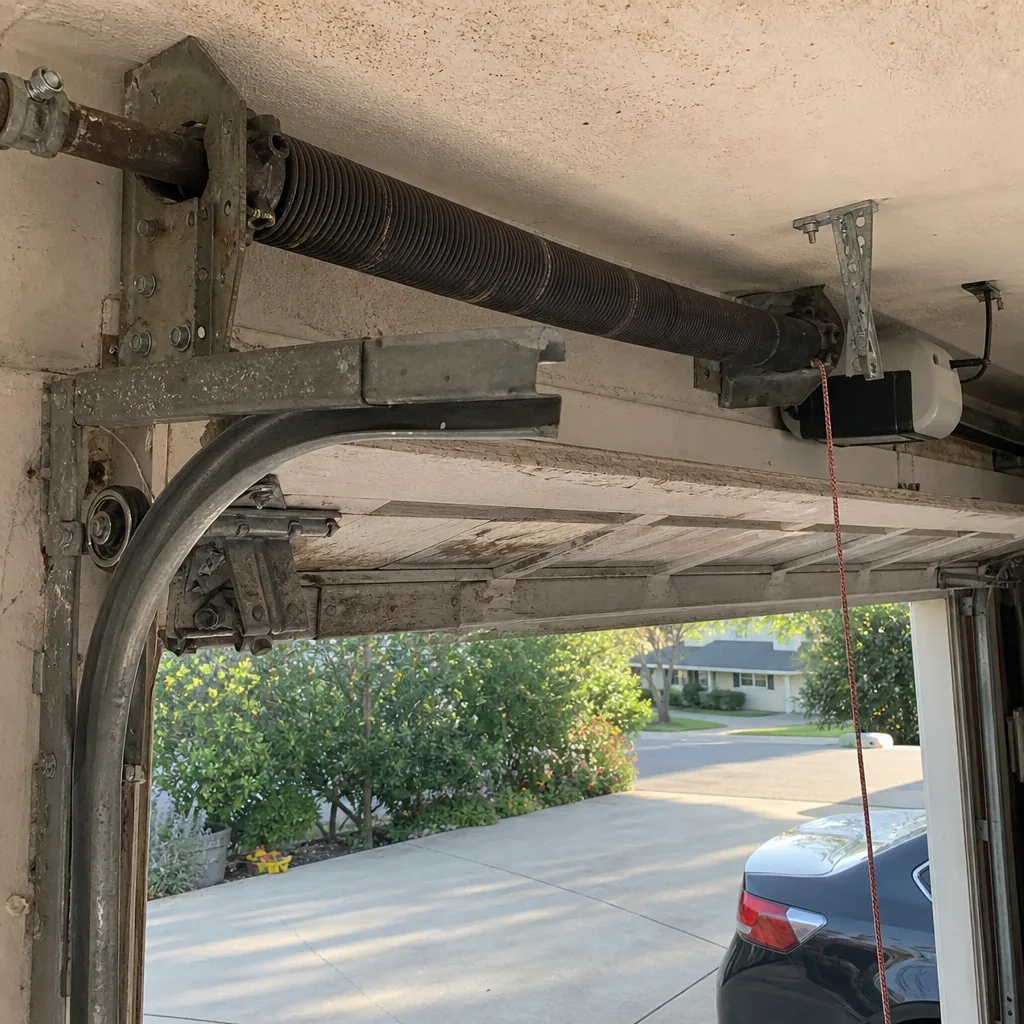 Before
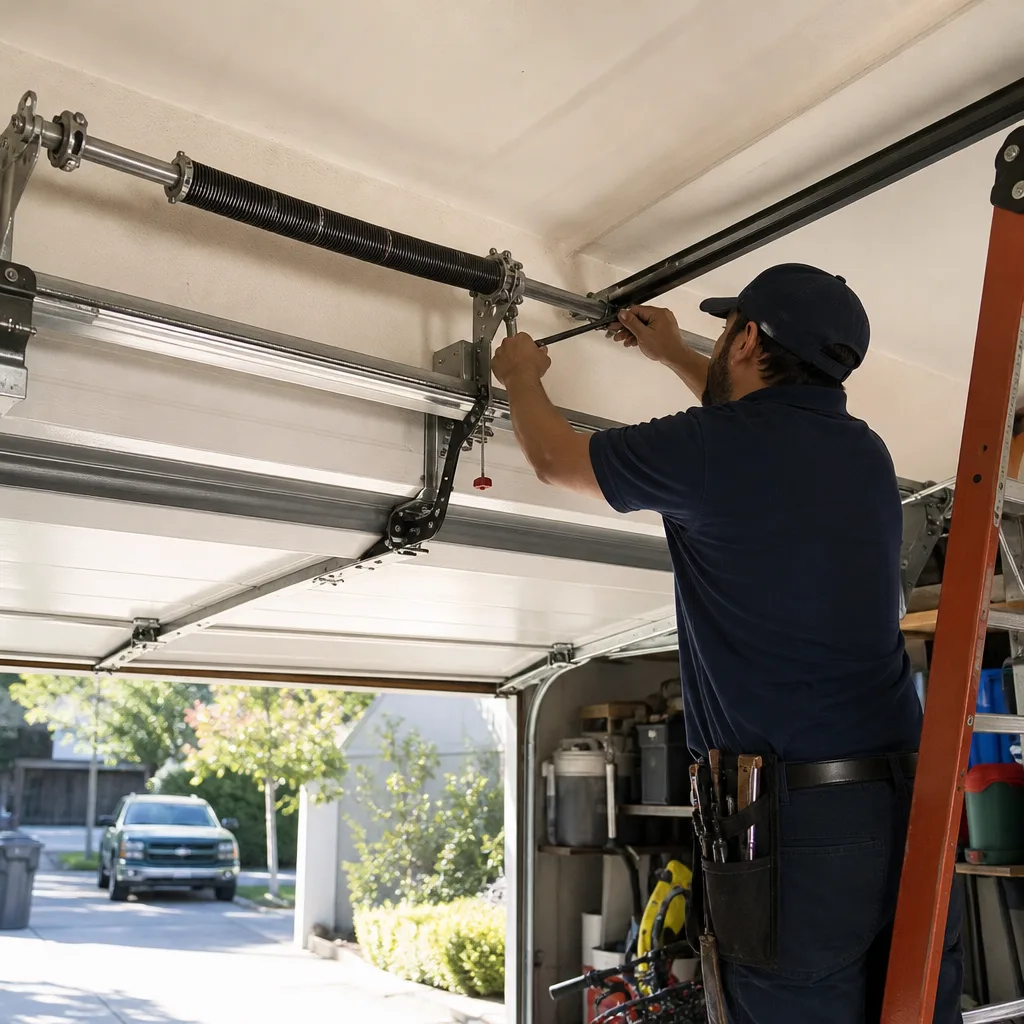 After
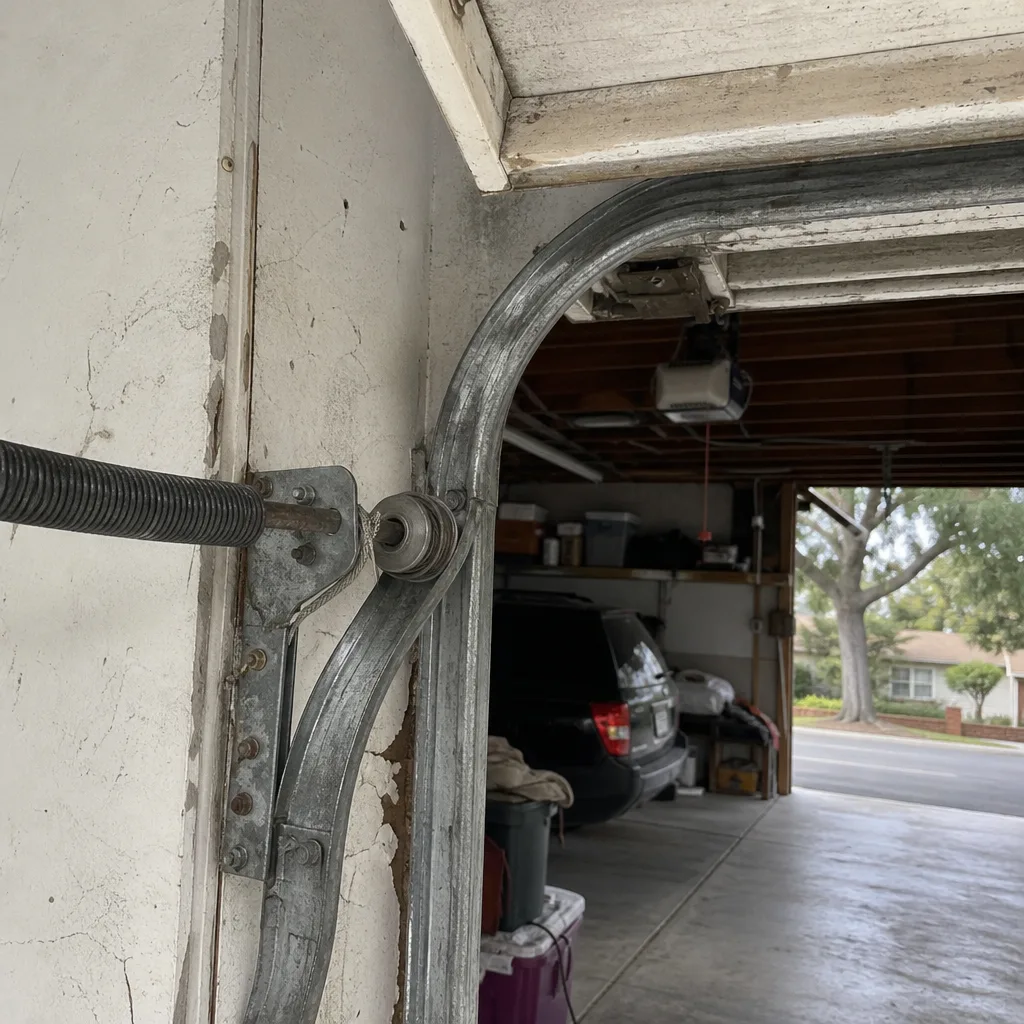 Before
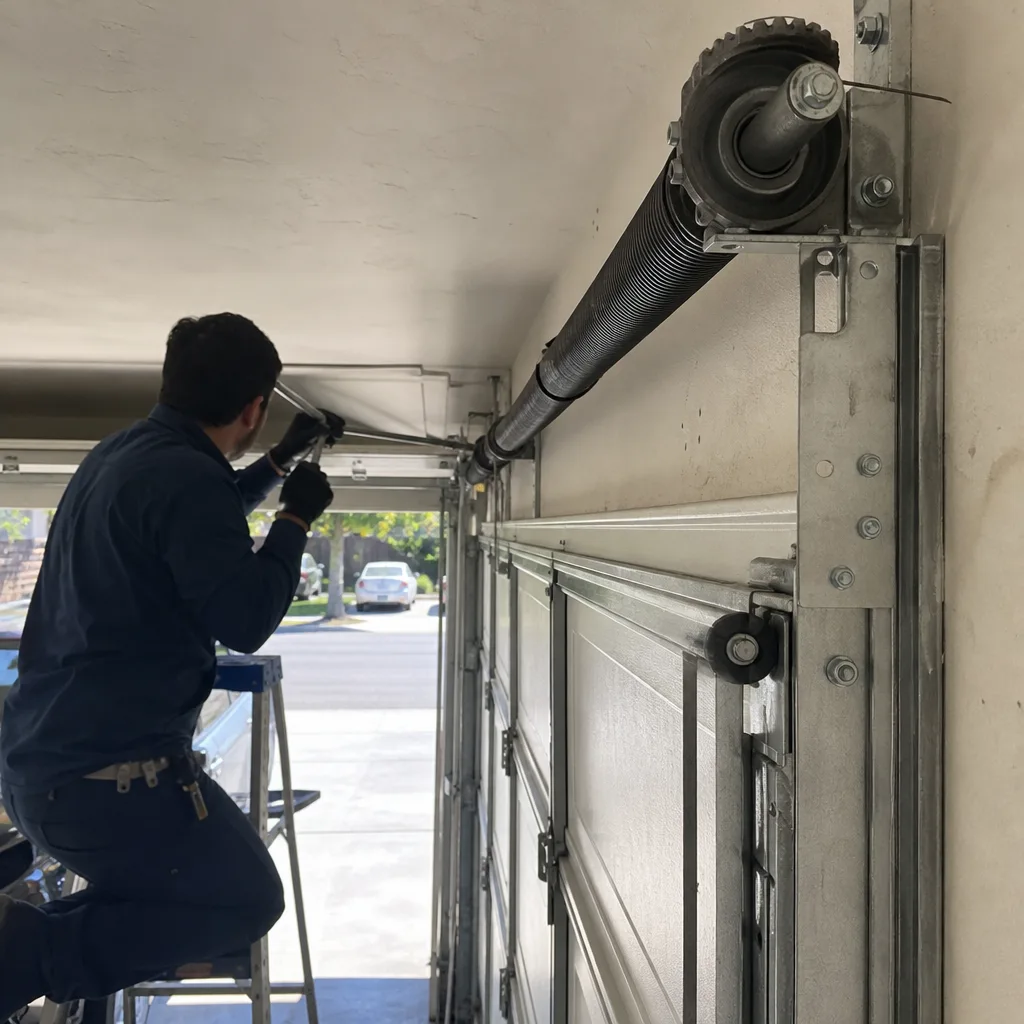 After
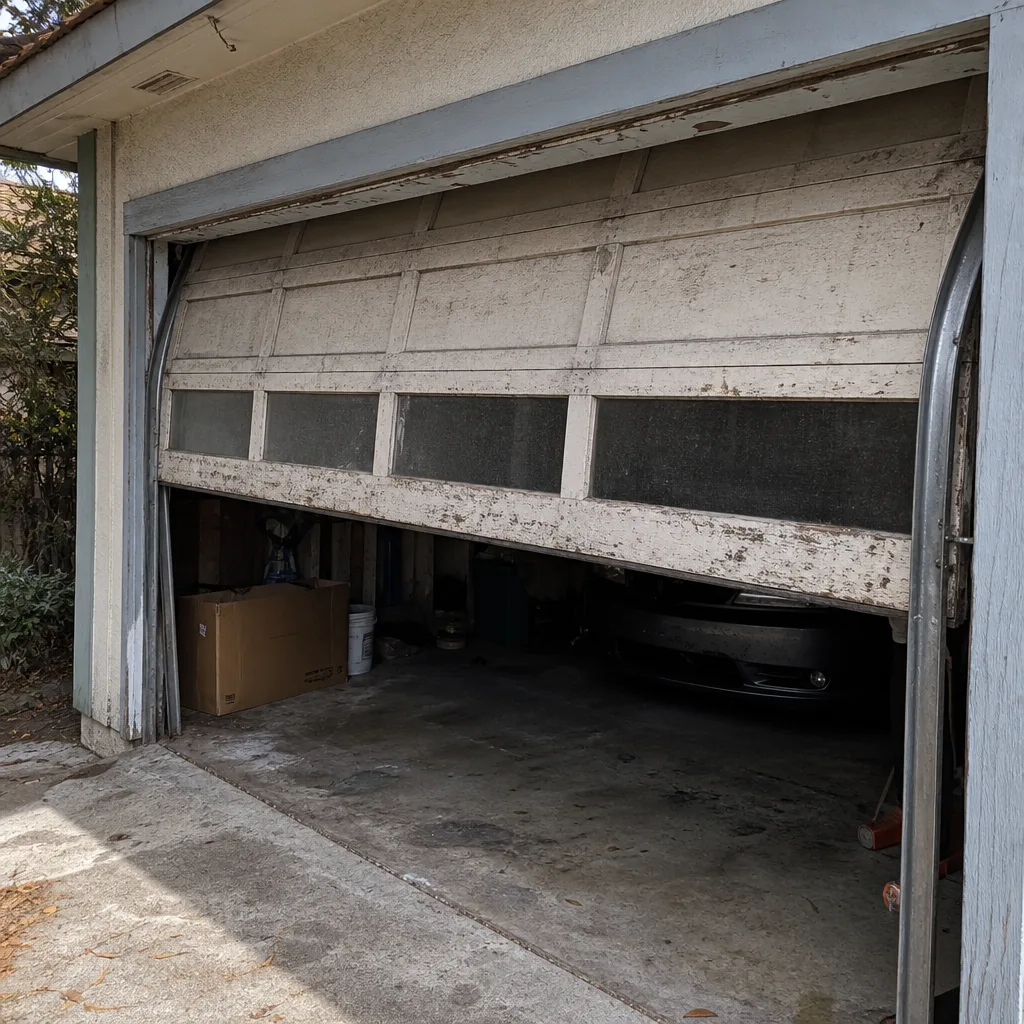 Before
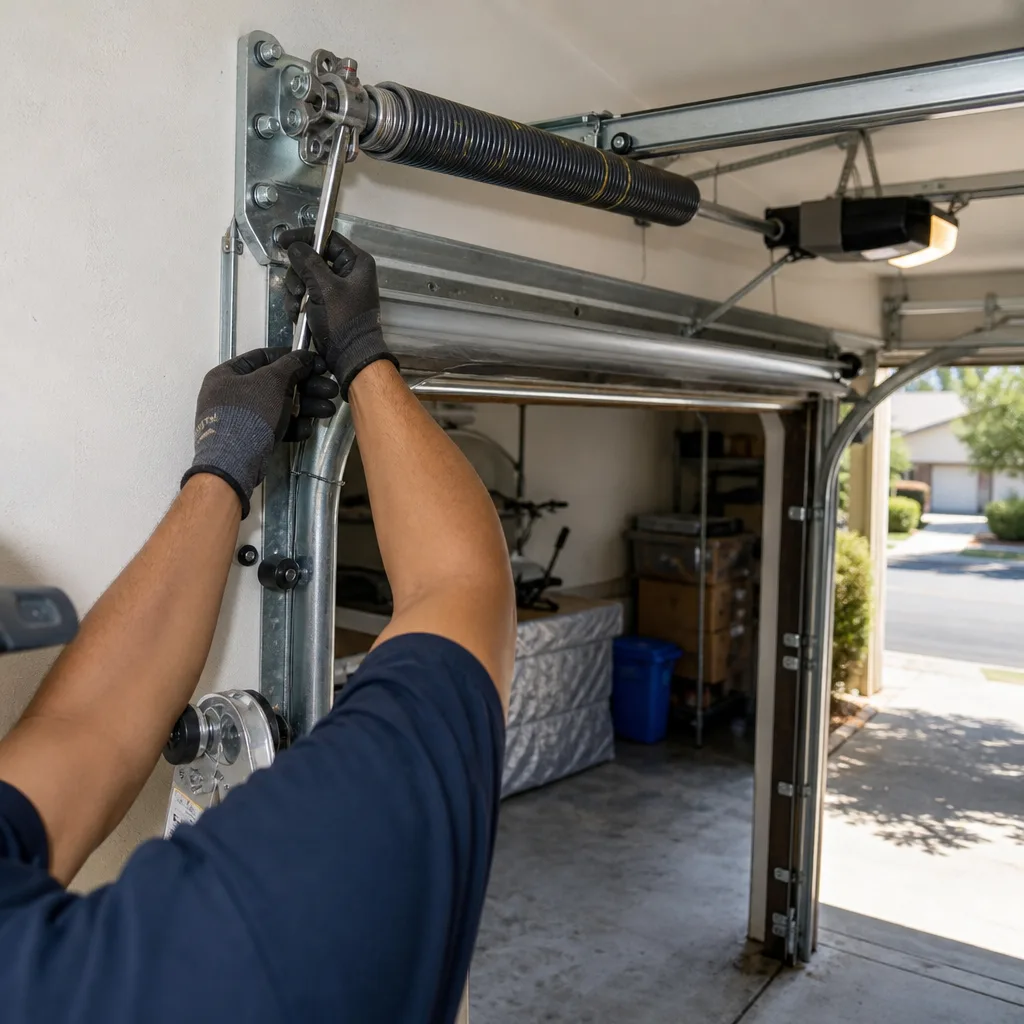 After
When to Call a Professional
A garage door spring under tension is not a do-it-yourself project. The springs hold enough force to lift a 150 to 200-pound door, and when they snap, the release of that energy can cause serious injury. If your door has a broken spring, a snapped cable, or a track that’s pulled away from the wall, shut the door down and call someone who does this every day. Likewise, any issue involving the opener’s electrical connections, safety sensors, or travel limits is worth professional attention before it becomes a door that opens at 2 a.m. on its own. Stonewall Garage Door Repair offers free estimates in Pasadena. We’re the team that homeowners call when the door needs the right fix, not the fast fix. Call (855) 740-8388 and we’ll walk you through what’s happening before anyone rolls a truck. The price is quoted and agreed before any work starts, every time.
Frequently Asked Questions
The cost depends on what failed, but the typical range in Pasadena runs from roughly $150 for a minor track adjustment or sensor realignment to $500 or more for a full spring replacement on a double-wide door. Torsion spring replacement on a single door typically lands between $200 and $400. We recommend calling (855) 740-8388 for an exact quote, and we’ll confirm the price before any work begins.
Yes, and we do it regularly in Bungalow Heaven and Garfield Heights. The key is selecting a door with panel patterns and proportions that match the era of the house, then choosing a finish that reads as wood without the maintenance burden of real wood. Carriage-style faux-wood doors from manufacturers like Clopay and Amarr work well on Craftsman homes, especially when paired with period-appropriate hardware.
The shaking is usually a sign that the door doesn’t have enough wind-load bracing for its exposure. Hillside homes and any property with an unobstructed north or northeast exposure need doors rated for higher wind speeds, and older doors often lack the internal struts that provide that stiffness. A professional inspection can tell you whether the door can be reinforced or needs replacement.
Yes, and the best option for garages with low ceilings or narrow single-car bays is a side-mount opener like those made by LiftMaster and Genie. These units mount to the wall beside the door, not overhead, which frees up clearance and allows integration with smart-home platforms like myQ or Aladdin Connect. The electrical circuit must be checked first, since many older garages need a grounded outlet upgrade.
A well-maintained steel door in Pasadena can last 20 to 30 years, while a solid wood door may need significant refinishing or replacement within 10 to 15 years due to the dry heat and Santa Ana wind stress. Springs typically need replacement every 7 to 10 years depending on how often the door cycles. Regular service extends the life of the door and the opener both.
Replacing a visibly dated or dented door is one of the strongest curb-appeal investments you can make before listing. Pasadena buyers are attentive to architectural character, and a garage door that matches the home’s era reads as well-maintained from the first drive-by. A new door plus a quiet modern opener often pays for itself in faster offers and fewer buyer objections. Call (855) 740-8388 for a free estimate if you’re prepping a home for market.
For more on opener repair across all the brands we service, see Garage Door Opener Repair in Pasadena.
The Bottom Line
A garage door in Pasadena succeeds when it fits the house it hangs on. That means a door matched to the era of the architecture, rated for the Santa Ana wind your lot actually gets, and paired with springs and an opener sized for the garage as it was built, not as a generic catalog assumes. Most failures we see come down to a mismatch, not a manufacturing defect. Getting the selection right the first time means fewer emergency calls, steadier operation, and a garage that looks like it belongs. For more guides & resources on choosing and maintaining your door, visit our blog. If you’d rather have a local team assess your specific door and give you a straight answer, that’s what we do. Call (855) 740-8388 and we’ll take it from there.
Written by the team at Stonewall Garage Door Repair, serving Pasadena since 2013.