

Last updated October 31, 2026
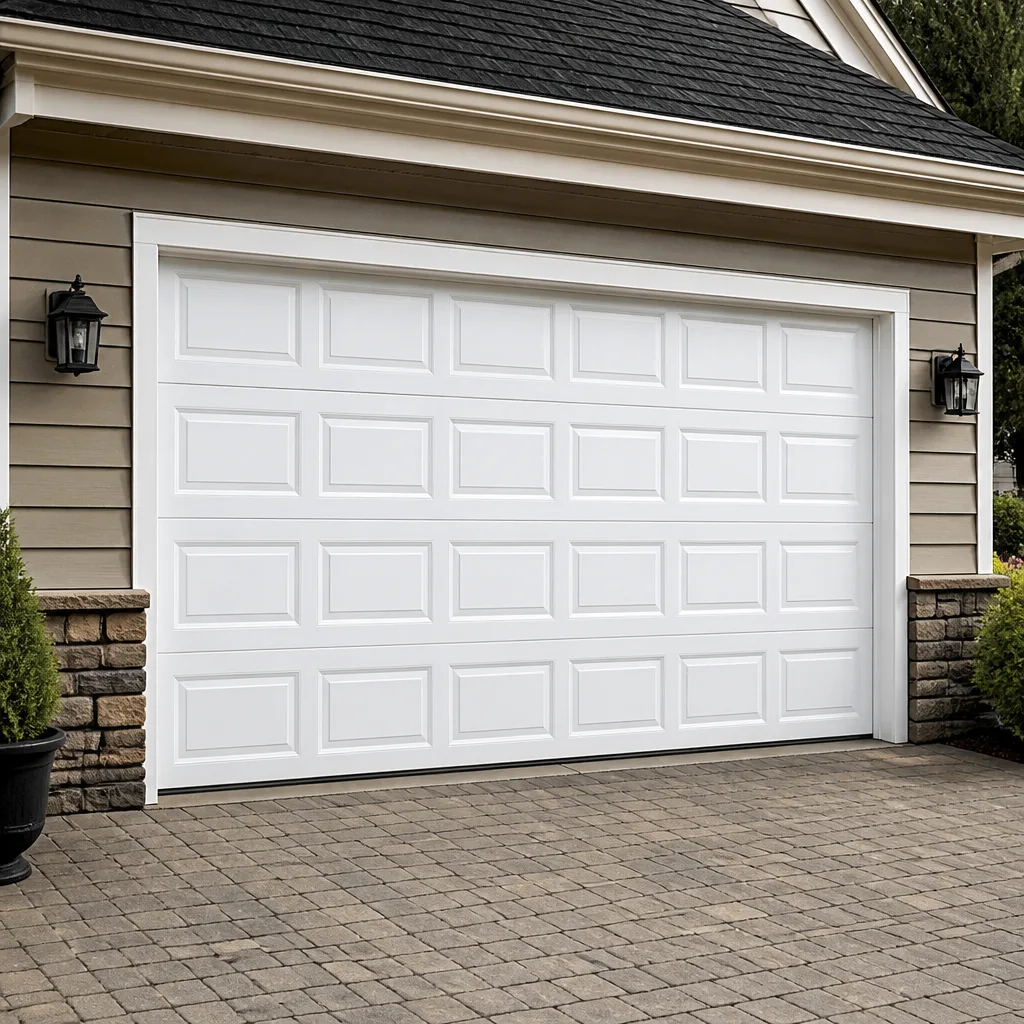 Raised-panel steel
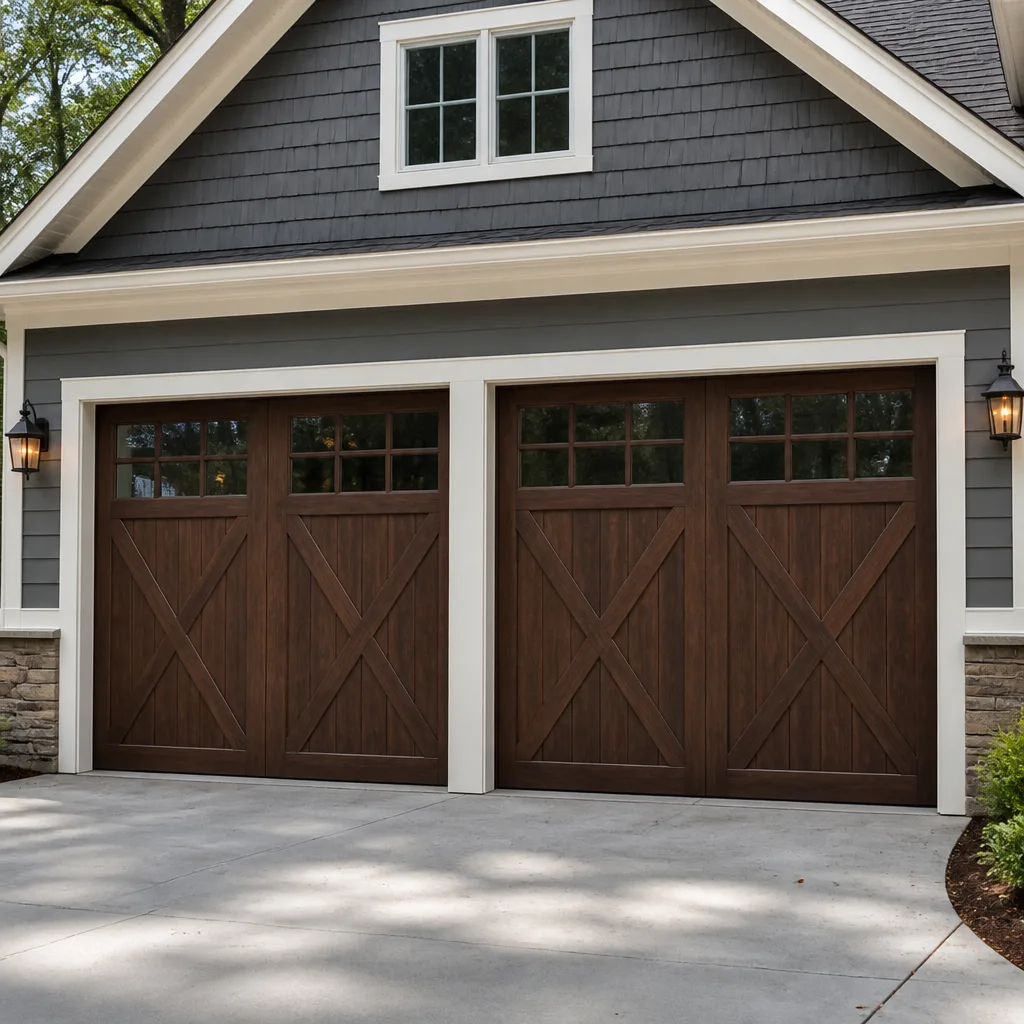 Carriage house
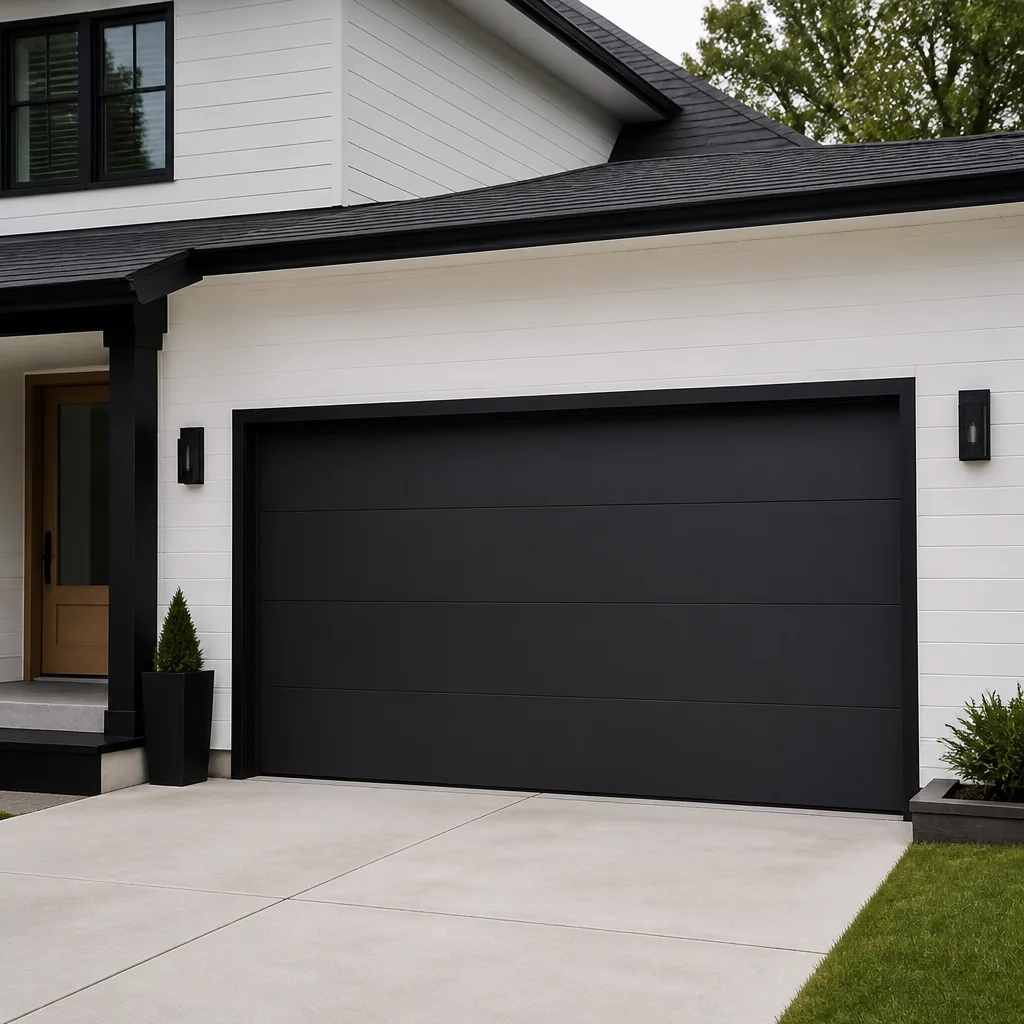 Modern flush
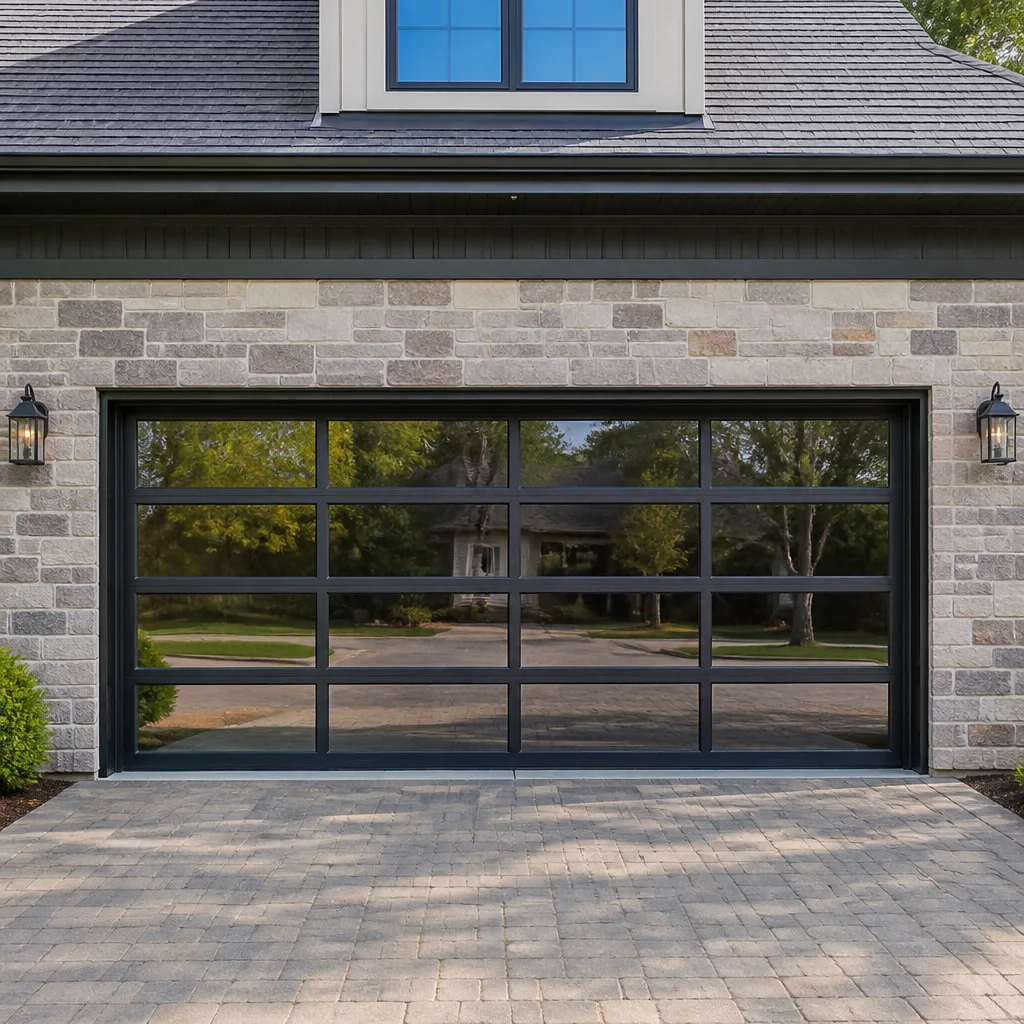 Full-view glass
 LiftMaster openers
 Chamberlain openers
Full 25-point door and opener safety check with every visit - springs, cables, rollers, tracks, and your LiftMaster or Chamberlain opener included
You get a price before we start. It does not change when the truck arrives.
Get your free estimateGarage Door Repair Maintenance Checklist for Pasadena Homeowners
The number-one item on most garage door maintenance checklists, lubricating the tracks to prevent ice buildup, is completely irrelevant in Pasadena. It’s not just wasted effort; it distracts from the failures that actually kill garage doors in our climate: UV radiation breaking down seals and panels, dry-heat cycling fatiguing torsion springs, and the slow accumulation of micro-stress from seismic activity that loosens bolts and shifts track alignment. This guide replaces the generic national checklist with a maintenance routine built around what we actually see on our Garage Door Repair services across Pasadena, from Bungalow Heaven to Hastings Ranch. You’ll learn which tasks matter every quarter, which ones depend on your door material, and which sounds and movements to log so a technician can diagnose your door in minutes instead of hours.
Quick Answer
A Pasadena garage door maintenance checklist should focus on quarterly visual inspections for UV seal degradation and dry-climate spring wear, monthly track and roller checks for seismic drift, and seasonal lubrication with a dry-climate silicone or lithium formula, never WD-40. Most Pasadena homeowners need to replace rubber weather seals every 3 to 5 years due to sun exposure, inspect spring tension after any earthquake over magnitude 4.0, and schedule a professional inspection every 12 to 18 months to catch hairline stress before it becomes a broken spring or snapped cable.
Styles & brands we work with
Table of Contents
- Why Pasadena’s Climate Demands a Different Maintenance Approach
- The Quarterly Pasadena Inspection: A Room-by-Room Walkthrough
- UV and Heat-Cycle Damage: What the Sun Does to Seals, Panels, and Finishes
- Spring Tension After Seismic Activity: The Step No National Checklist Includes
- Dry-Climate Lubrication: Why WD-40 Is the Wrong Answer in Pasadena
- Door Material Matters: Steel, Wood, Aluminum, and Composite Schedules
- Red-Flag Sounds and Movements: What to Log Between Service Visits
- Common Mistakes Pasadena Homeowners Make
Why Pasadena’s Climate Demands a Different Maintenance Approach
Pasadena averages over 280 sunny days per year, with summer temperatures routinely crossing 95 degrees and winter humidity rarely climbing above 40 percent. A garage door in Pasadena doesn’t contend with road salt, freeze-thaw cycles, or rust from standing snow. What it does contend with is relentless ultraviolet radiation, which breaks down rubber, vinyl, and paint at a rate most national maintenance guides don’t account for. The heat is dry, and dry heat accelerates metal fatigue in torsion springs differently than humid heat does. Springs under constant tension lose elasticity faster in low-humidity environments because there’s no moisture barrier slowing the micro-fractures that develop at the molecular level over thousands of open-close cycles.
Then there’s the seismic factor. Pasadena sits near several active fault lines, including the Raymond Fault and the Sierra Madre Fault Zone. Even minor earthquakes, the ones that don’t knock anything off a shelf, send vibration through the garage door system. That vibration loosens track brackets, shifts roller alignment, and can cause a torsion spring to settle unevenly on its shaft. These micro-shifts accumulate. A door that worked flawlessly in January may bind slightly in April after a 3.8 temblor that most homeowners forgot about by the next morning. Our maintenance checklist addresses these realities directly, because we’ve seen too many Pasadena homeowners follow a generic online checklist and miss the exact failure point that ends with a broken spring and a door that won’t open. For a deeper look at early warning signals, see our Garage Door Warning Signs: A Pasadena Homeowner’s Reference Guide.
Working on the brand already on your garage means knowing how each manufacturer’s materials respond to this specific climate. Amarr steel doors with factory-baked finishes hold up better under UV than aftermarket paint jobs, but their bottom seals degrade at the same rate as any other rubber component. Wayne Dalton’s TorqueMaster spring systems, for example, need a different inspection approach than standard torsion setups. Craftsman openers, many of which were installed years ago when the brand was still carried by major retailers, shift out of alignment slightly with each seismic event. Knowing these brand-specific behaviors is what turns a generic checklist into a genuinely useful maintenance routine for a Pasadena home.
The Quarterly Pasadena Inspection: A Room-by-Room Walkthrough
Four times a year, set aside twenty minutes to walk through this inspection sequence in order. We’ve arranged it the way a technician approaches a service call: from the outside in, then from the opener down to the springs. This sequence catches problems in the order they’re most likely to develop in Pasadena’s climate.
Step 1: Inspect the Bottom Weather Seal
Kneel at the base of the closed door and run your hand along the bottom seal, which is usually a rubber or vinyl strip attached to the door’s bottom edge. In Pasadena, this seal hardens and cracks from UV exposure and dry heat, often within three years. Look for a whitish haze on the surface, which indicates oxidation, or tiny splits at the corners. A hardened seal lets dust and warm air into the garage, and in the summer, it can also let scorpions and black widows in. Replace the seal when it’s stiff to the touch, not just when it shows visible cracks. The material should flex easily when you bend it. If it snaps or resists, it’s already past the point where it keeps anything out.
Step 2: Check Track Alignment Visually
Stand close to the vertical track on each side of the door and sight down its length. Both tracks should be perfectly straight lines. In Pasadena, minor seismic events gradually knock track brackets out of true, and a track that’s off by an eighth of an inch at the midpoint can cause the rollers to bind and the door to stutter as it moves. Look for any gap between the track and the mounting bracket, any shiny spot on the track where metal has been rubbing, or any new gap between the door edge and the track itself. Shiny spots mean the door’s weight is no longer evenly distributed, which means the springs are fatigueing or a roller is wearing unevenly.
Step 3: Test the Door’s Balance Manually
Pull the red emergency release cord to disengage the opener. Lift the door by hand to about waist height, then release it. A properly balanced door will stay put, maybe dropping only an inch or two. If it slams down, the springs have lost tension and the door is running heavy, which shortens opener lifespan quickly. If it flies upward, the springs are over-wound, which is rare but happens when a previous adjustment was done incorrectly. In dry-climate conditions, springs in Pasadena typically lose ten to fifteen percent of their lifting force over three to four years. A balance test catches that fade before it becomes a full failure.
Step 4: Listen for the Sound Signature
With the door re-engaged, run it through a full cycle and listen. A Pasadena door in good condition sounds like a low, even rumble. Grinding, squealing, rhythmic thumping, or a sharp metallic snap at any point in the cycle is a specific diagnostic signal. Log what you hear, and where in the cycle you hear it, so if you call us, the technician already knows which component to inspect. We’ll cover the full sound dictionary below.
Step 5: Inspect the Safety Sensors
The photo-eye sensors near the bottom of the track on each side should be aligned, clean, and securely mounted. In Pasadena’s dry, dusty conditions, a thin film of dust builds up on the sensor lenses fast, especially in neighborhoods near the arroyo where silt blows in from the wash. Wipe the lenses with a dry microfiber cloth, not a wet one, and check that both small LED indicators are solid, not flickering. A flickering sensor usually means a loose wire or a mounting bracket that’s been bumped out of alignment.
If any of these steps reveal a problem, or if you’re not sure what you’re looking at, the fastest path to a real diagnosis is a professional inspection. Our Garage Door Repair in Pasadena service includes a full 25-point inspection with every visit, and we walk you through what we find before we touch anything.
UV and Heat-Cycle Damage: What the Sun Does to Seals, Panels, and Finishes
The sun is the single most destructive force acting on garage doors in Pasadena, and it works in three distinct ways. First, ultraviolet radiation breaks down the molecular bonds in rubber and vinyl components, causing weather seals, bottom astragals, and even the insulation behind steel panels to become brittle and crack. Second, the thermal expansion and contraction cycle, repeated daily, stresses every joint, seam, and fastener on the door. A steel panel on a Pasadena door can reach 150 degrees Fahrenheit on a summer afternoon and drop to 55 degrees by early morning. That’s a nearly 100-degree swing every single day for months at a time. Third, dry heat accelerates paint and powder-coat oxidation, which is why factory-finished doors from brands like Amarr and Raynor typically outlast aftermarket paint jobs by a significant margin in our market.
What does UV damage look like on the ground? On wood doors, which are common in older Pasadena neighborhoods like Madison Heights and the Historic Highlands, the varnish or paint develops a chalky white film first, then starts to crack along the grain lines. Once moisture can enter the wood through those cracks, even in our dry climate, the panels begin to warp and the joints start to separate. On steel doors, the finished surface dulls over time, and the bottom seal is almost always the first component to fail. On the inside of the door, if you see daylight through any crack or seam, the weatherstripping has already failed. For a full breakdown of which door types hold up best under Pasadena conditions, see our Garage Door Installation in Pasadena page.
The best maintenance move for UV protection is fast and simple: apply a UV-blocking protectant to rubber seals and weatherstripping twice a year, in March and September. Products designed for automotive trim work well. For painted wood doors, keep a maintenance coat of exterior-grade paint or marine varnish on the surface, and touch up any bare spots before the dry season peaks. For steel doors, wash the surface twice a year with mild soap and rinse thoroughly. Avoid harsh detergents, which strip the protective clear coat and accelerate oxidation. And when a seal or panel has already lost the battle with the sun, the right fix is a replacement part, not a patch. We keep a full inventory of seals and weatherstripping sized for every major brand on our truck, because in our experience, a Pasadena homeowner who notices a cracked seal on a Monday wants it replaced that day, not next week.
Spring Tension After Seismic Activity: The Step No National Checklist Includes
Most garage door maintenance guides are written by companies in the Midwest or the South, where the ground doesn’t move. In Pasadena, it does. Any seismic event over roughly magnitude 3.5 that you can feel in your home sends vibration through the garage door system, and that vibration has a specific effect: it causes torsion springs to rotate slightly on their shafts, which unevenly redistributes tension. The result is a door that looks fine but lifts unevenly, or hangs slightly crooked when open, or develops a new sound you didn’t hear before. This is what we call micro-stress, and it’s the most under-diagnosed cause of premature spring failure in Southern California.
After any earthquake you feel, perform this fast post-seismic check:
- Do a visual spring inspection from a safe distance. Stand inside the garage, door closed, and look up at the torsion spring above the door. A healthy spring has a consistent coil spacing along its entire length. If you see coils bunched together at one end or a visible gap where coils have separated, the spring has shifted. Do not touch it, and do not stand directly under it.
- Check the door’s resting position. Open the door halfway and release it by hand using the emergency release, as described in the quarterly walkthrough. If the door now drifts four inches or more in either direction, or if one side sags lower than the other, the spring tension has changed since the last seismic event.
- Watch the door during a full open-close cycle. If the door hesitates at a specific point in its travel, or if one side starts moving before the other, the track may have been knocked slightly out of alignment by the tremor.
- Inspect the track bolts and brackets. Run a 7/16-inch socket over the track bolts on both sides, especially at the midpoint and the top curve. If any feel loose by even half a turn, the quake shifted the track assembly. Tighten them to snug, not over-tight, and re-test the door’s movement.
- Log it. Note the date of the earthquake, what you found, and any changes in the door’s behavior. This log is pure gold for a technician. When a Pasadena homeowner tells us exactly which quake preceded a new sound, we start the diagnosis at the most likely stress point instead of working through the whole system blind.
Spring inspection from a distance is a maintenance task. Spring adjustment is not. Torsion springs are under hundreds of pounds of tension, and in Pasadena’s dry climate, the steel is slightly more prone to sudden failure because there’s no humidity to slow the propagation of micro-cracks. If your post-seismic check reveals any coil separation, uneven lifting, or new sounds, call a professional. One call to our Stonewall Garage Door Repair home team gets a technician to your Pasadena home with the right springs and the right tools to set the tension correctly, safely, and permanently.
Dry-Climate Lubrication: Why WD-40 Is the Wrong Answer in Pasadena
WD-40 is a water-displacement solvent. The “WD” literally stands for water displacement. In Pasadena, where the air is dry and water is rarely the problem, WD-40 does two bad things: it strips existing lubricant from the hinges and rollers, and it leaves behind a thin, sticky residue that attracts dust and grit. Within a week of a WD-40 application, your garage door is working worse than before, with gritty, grinding rollers and hinges that bind. This is the single most common lubrication mistake we see in Pasadena garages, and it’s entirely preventable.
The right lubricants for a dry climate are silicone-based or white lithium products. Silicone spray is the workhorse: it penetrates tight tolerances, doesn’t attract dust, and maintains its viscosity in temperatures from 40 degrees to over 120 degrees. White lithium grease is heavier and works well for the torsion spring, where you want a coating that stays put during the spring’s constant flexing. Use silicone spray on the rollers, hinges, and the opener chain or screw drive. Use white lithium grease on the spring coils and the bearing plates at each end of the spring tube. Both are available at any hardware store in Pasadena. Apply silicone to the rollers every six months, to the hinges every four months, and white lithium to the spring every six to twelve months.
Never lubricate the track itself. The track is a guide rail, not a bearing surface. Putting lubricant on a track is like oiling a road: all it does is make the rollers slip and slide, and in Pasadena’s dry conditions, it creates a paste of dust and oil that gunks up the bottom track section within a month. The rollers have their own bearings inside the wheel, and that’s where the lubrication belongs. If your rollers are the original steel ones and they’ve started making noise, lubrication is a temporary measure. Upgrading to nylon rollers with sealed ball bearings is a worthwhile maintenance move, and it’s one of the mechanical components where brand compatibility matters: a Raynor door uses slightly different roller dimensions than an Amarr or Wayne Dalton, and putting the wrong roller in causes chatter and wear. We carry the correct spec for all eight of our supported brands. And if your hinges or rollers are already worn to the point of play, the right fix is replacement, not more lubricant. A roller that wobbles in the track is also a roller that’s damaging the hinge it’s attached to.
Door Material Matters: Steel, Wood, Aluminum, and Composite Schedules
No single maintenance schedule works for every garage door in Pasadena, because the material of your door determines what fails first and how fast. Here’s the breakdown, door type by door type, based on what we see in the field across Pasadena’s neighborhoods.
Steel Doors
Steel is the most common door material in Pasadena, especially in newer construction and in the hillside neighborhoods where fire resistance matters. Steel doors fail from the bottom up: the bottom seal hardens, the bottom panel rusts at the corners where the paint was scratched, and the hinge screws work loose over time. Maintenance schedule: inspect the bottom seal every quarter, touch up any paint chips with rust-inhibiting primer twice a year, and check hinge screw tightness every six months. In Pasadena’s dry air, steel doors don’t rust as fast as they do in coastal zones, but a scratch that goes untreated through a rainy winter will start to oxidize by spring. Brands matter here: an Amarr steel door with a factory finish will typically hold its surface for 15 to 20 years in Pasadena, while an older, unprotected door can show surface rust in as little as 8 years.
Wood Doors
Wood doors are the signature of Pasadena’s craftsman and Spanish colonial homes, and they demand more attention than any other material. In dry air, wood shrinks. Joints open. Panels crack. The varnish or paint surface degrades under UV exposure. Maintenance schedule: inspect the finish every quarter, coat the door with UV-blocking sealant or marine varnish every 12 to 18 months, and monitor the joints between panels. When a wood door starts to show movement at the joints, it’s usually a sign that the door’s internal frame is drying out and losing structural integrity. Wood doors in Pasadena last 20 to 30 years with diligent maintenance, and half that without it. If you’re weighing repair versus replacement on a wood door, our Garage Door Installation in Pasadena team can walk you through what’s repairable and what’s reached the end of its service life.
Aluminum Doors
Aluminum is light, rust-free, and increasingly common on modern homes in Pasadena. But aluminum has two weaknesses in our climate: it conducts heat very efficiently, which means the panels expand and contract dramatically each day, and the factory finish is vulnerable to UV fading. Maintenance schedule: inspect the panel joints for stress cracks every quarter, wash the surface twice a year, and check the frame bolts for loosening every six months. Aluminum doors also transmit more vibration to the opener than steel or wood doors do, so the opener’s mounting bracket and the door’s connection point deserve an extra check every quarter. A loose opener bracket on an aluminum door will rattle itself loose completely within a month if ignored.
Composite Doors
Composite doors, made from wood fibers and resin, are designed to look like wood without the maintenance burden. They handle Pasadena’s dry heat well, with one exception: the edges of the panels can absorb moisture during the rare rainy periods and then dry out unevenly, causing slight warping at the corners. Maintenance schedule: inspect the panel edges every quarter, keep the bottom seal in good condition so water doesn’t wick up into the panels, and wash the surface every six months. Composite doors don’t need refinishing, but they do need their hardware checked, because the material is heavier than wood and puts more load on the hinges and springs over time.
Red-Flag Sounds and Movements: What to Log Between Service Visits
Garage doors talk. They communicate through sound and movement, and the specific vocabulary is consistent enough that a homeowner can translate what the door is saying into a useful diagnostic note for a technician. In our experience, the most valuable thing a Pasadena customer can tell us on the phone is not just “it’s making a noise” but exactly what the noise sounds like and when in the cycle it happens. Here’s the sound and movement dictionary, matched to the likely causes we see most in Pasadena.
Sounds
- Squealing or shrieking during movement: This usually means dry roller bearings or hinges, and it’s your cue that lubrication is overdue. If the squeal persists after proper silicone application, the bearing is worn out and the roller needs replacement. On a Craftsman opener, a shrieking sound during the open cycle specifically often comes from the drive gear, not the door itself.
- Grinding or metal-on-metal scraping: The door is likely binding in the track, usually because of seismic drift or a loose bracket. A grinding sound near the top of the cycle points to the curved track section. This is a repair indicator, not a lubrication issue, and running the door with this sound active will damage the track and the rollers.
- Rhythmic thumping or banging: A door that thumps at the same point in every cycle usually has a bent track section, a loose hinge, or a roller that’s cracked and catching. The thump corresponds to a specific segment of the door passing through the damaged area.
- A sharp snap or bang right at the start of a cycle: This is the opener jerking the door into motion, which means the door is running heavy and the springs have lost tension. The snap is the opener’s drive system taking up sudden slack. This is a precursor to a broken spring, and in Pasadena’s dry climate, it can happen with almost no warning. If you hear it, stop running the door and call for service the same day.
- A continuous rattling while the door is stationary: The door or the opener’s mounting hardware has loosened. Seismic events are the usual cause in Pasadena. Check all bolts and tighten anything loose before running the door again.
Movements
- Hesitation at the same point in every cycle: The door is binding in the track at that spot. This can be a bent track, a misaligned section after seismic movement, or a roller that’s failing. Note the exact height where the hesitation happens.
- One side of the door starts moving before the other: Uneven spring tension, usually from a torsion spring that’s shifted on its shaft. This is the classic post-earthquake signature, and it needs professional correction before it causes a spring failure.
- The door reverses on its own before closing fully: The most common cause is misaligned or dirty safety sensors, but in Pasadena, a second cause is heat: on very hot days, the opener’s internal circuit board can overheat and trigger a false reversal. Note the time of day when the reversal happens. If it only happens in the afternoon in summer, the opener is overheating. If it happens at any time, it’s the sensors.
- The door opens but won’t close, or closes but won’t open: This is usually a travel limit or force setting issue on the opener, but it can also be a broken cable on one side. Look at both cables, the straight tension cables running along the sides of the door. If one is slack, that’s the answer. If both are tight, it’s an opener programming issue.
Keep a running note on your phone or a piece of paper in the garage. Each time the door does something new, note the date, the sound or behavior, and anything that preceded it, like an earthquake or a power outage. When you call a technician, that log shortens the diagnosis dramatically. It also tells us which parts to have on the truck, which is why same-day repairs are often possible here in Pasadena.
Common Mistakes Pasadena Homeowners Make
- Lubricating the track. The track is a guide rail, not a bearing surface. Lubricating it creates a sticky dust-and-oil paste that accelerates roller wear and attracts more grit. Lubricate the rollers and hinges, not the track.
- Using WD-40 on any part of the door. WD-40 is a solvent, not a lubricant, and in dry-climate Pasadena it strips the protective oils from your hinges and leaves a residue that bonds with dust. Use silicone spray or white lithium grease only.
- Ignoring small sounds because the door still works. A door that’s making a new sound has already reached the point of mechanical wear. Running it for another month only guarantees that the eventual repair is bigger and more expensive. The sound is the early warning. The broken spring is what happens when you don’t listen.
- Adjusting spring tension without the right tools or training. Torsion springs hold enough energy to cause serious injury or death when handled incorrectly. In Pasadena’s dry climate, spring steel is also slightly more brittle than in humid regions. No maintenance checklist should ever include a DIY spring adjustment, and any checklist that does should be thrown away.
- Replacing a door without considering what brand is already installed. When a homeowner swaps a Clopay panel for an off-brand panel or mismatches roller sizes, the door’s balance and the opener’s force settings go out of spec. Matching the existing brand’s components keeps everything within tolerance. We service the brand already on your garage, so if you don’t know what you have, we can identify it in minutes.
- Using the garage door as the only entry point. Garages in Pasadena are often attached, and many homeowners enter and exit exclusively through the garage. When the door fails, that’s the only route in or out. If your door is your primary entry, keep the maintenance schedule tight and the opener’s keypad battery fresh. And know how to use the emergency release from the outside if you don’t already: it’s a cable you can access through the top of the door with a coat hanger or a keyed release kit.
- Skipping the safety sensor check. In Pasadena’s dry, dusty months, a sensor lens can accumulate enough fine silt to fail in as little as three weeks. A dirty or misaligned sensor is the number-one cause of a door that reverses on its own. It’s a five-minute check that prevents most opener-related service calls.
See the difference
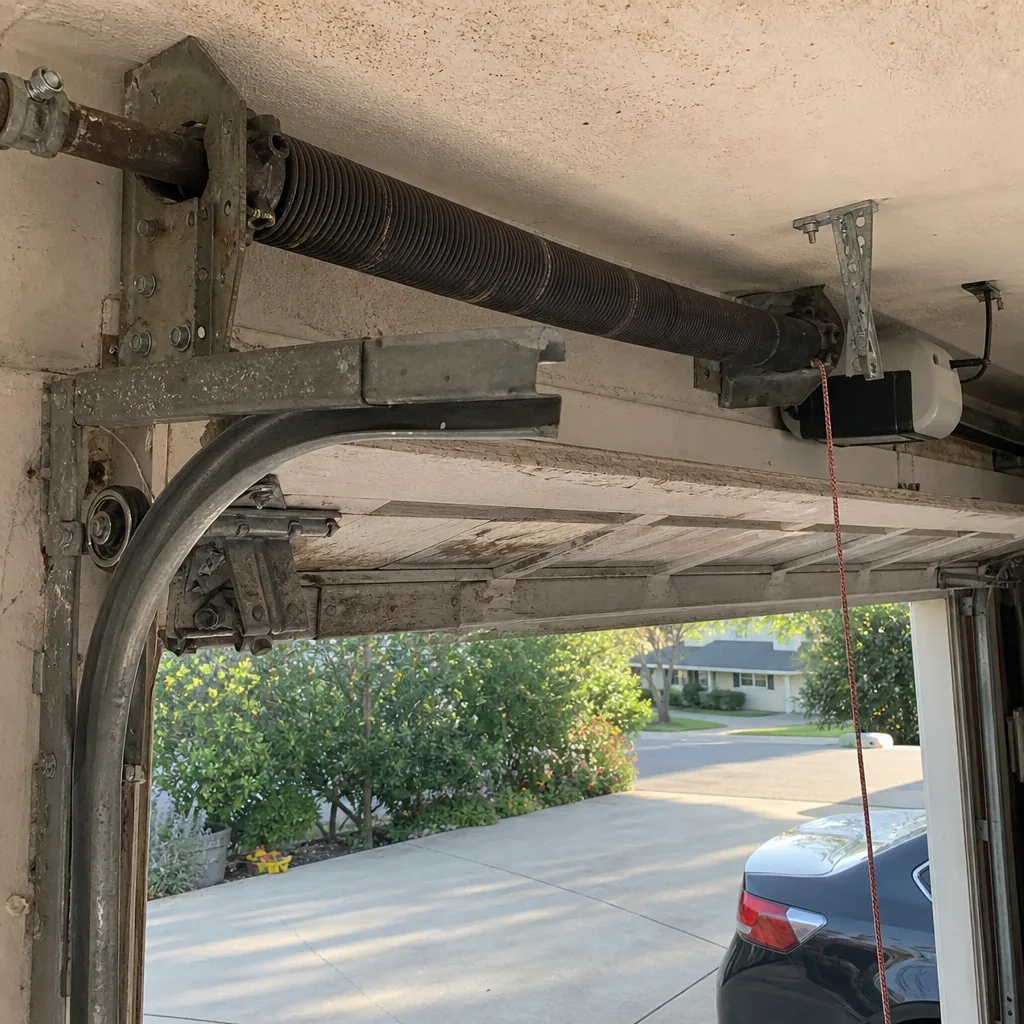 Before
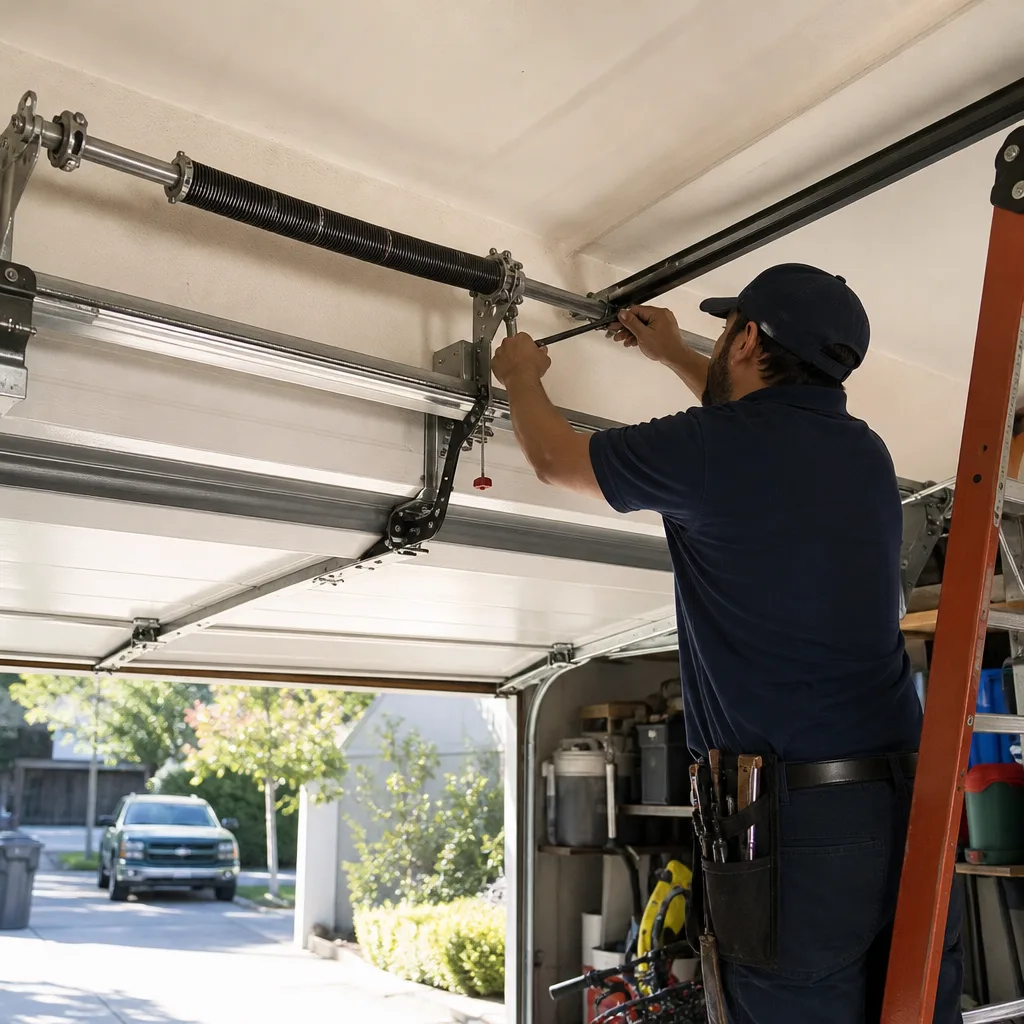 After
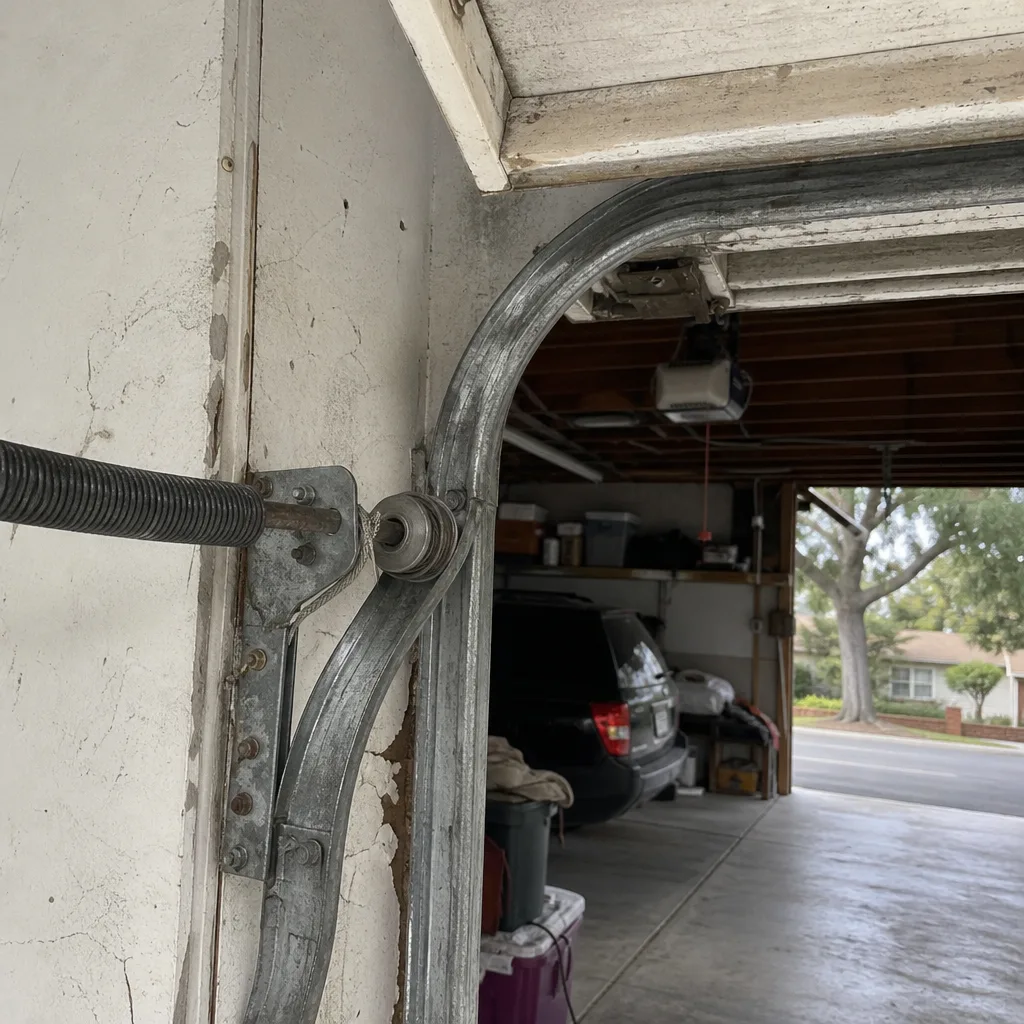 Before
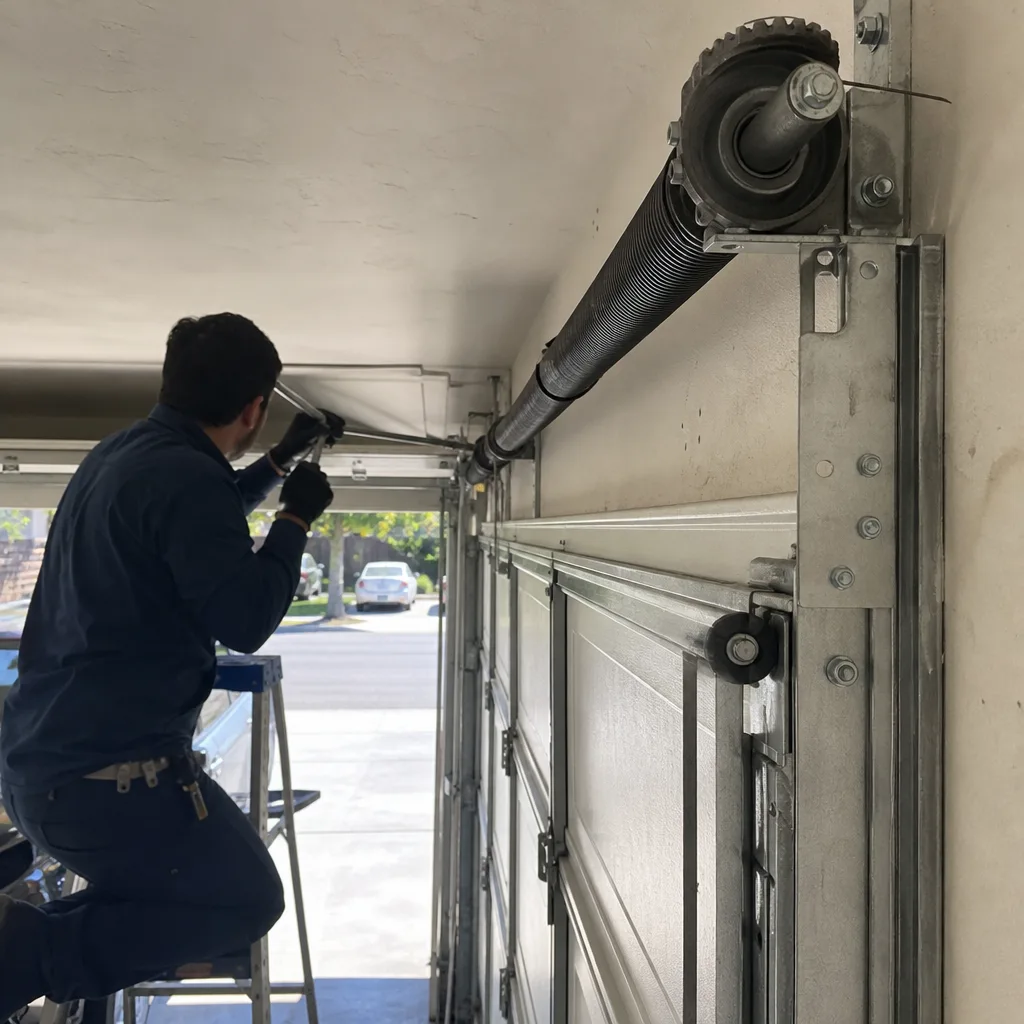 After
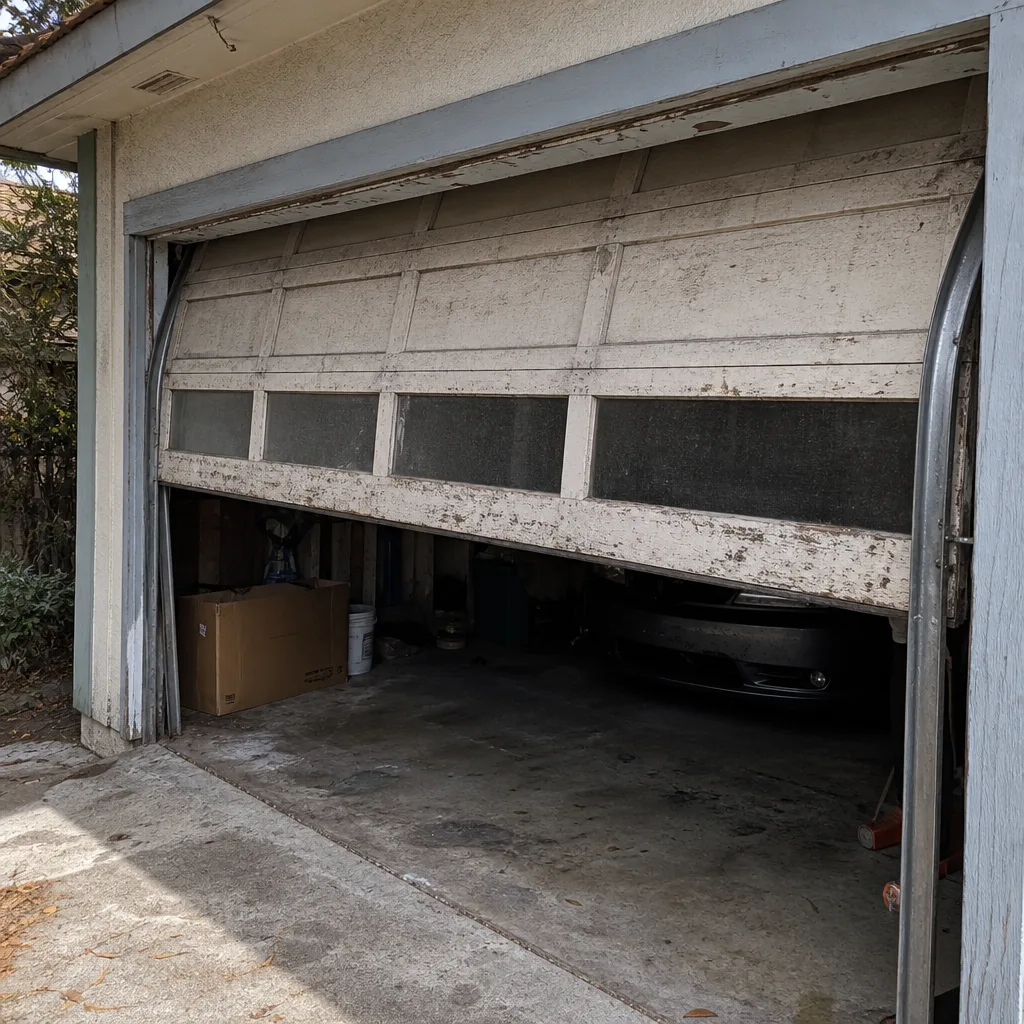 Before
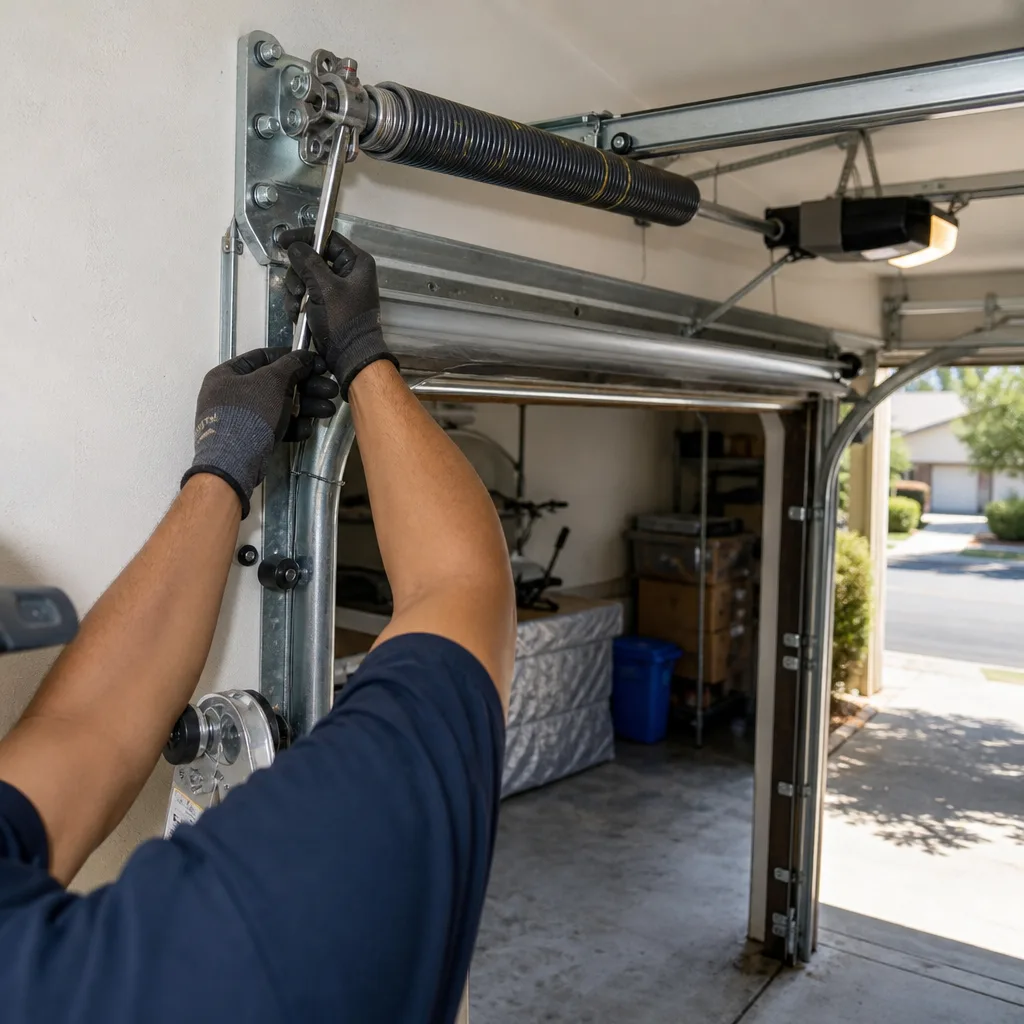 After
When to Call a Professional
Some garage door tasks deserve your attention and a wrench. Others need a technician with the right tools, the right training, and the right parts on the truck. You should call a professional when any of these conditions appears: the torsion spring shows coil separation, uneven gaps, or any visible wear; the door fails a balance test and won’t hold position when released by hand; a cable is frayed, kinked, or slack; the track is visibly bent or has shifted more than a quarter-inch from the wall; the door makes any of the red-flag sounds described above; or the door has started reversing on its own and the sensor check doesn’t fix it. Springs and cables under tension are genuinely dangerous, and the dry-climate spring brittleness in Pasadena makes them fractionally more prone to sudden failure than the same component in a humid city. Stonewall Garage Door Repair offers free estimates in Pasadena, call (855) 740-8388 and we’ll send a technician who knows your brand and arrives with the right parts.
Frequently Asked Questions
Lubricate the rollers and hinges with silicone spray every four to six months, and the torsion spring with white lithium grease every six to twelve months. Pasadena’s dry air means lubricant doesn’t wash away, but it also means dust settles into the lubricant faster, so twice-a-year attention keeps moving parts clean and quiet.
A grinding noise after seismic activity almost always means the track has shifted slightly out of alignment, causing the rollers to scrape against the track wall. The vibration from the quake loosens track brackets or knocks the track off true. This needs professional track realignment, and running the door in this condition will damage both the track and the rollers. Call (855) 740-8388 and we’ll come out the same day.
Standard torsion springs in Pasadena last 7 to 10 years on average, but dry-climate conditions and repeated seismic micro-stress can shorten that to as little as 5 to 7 years for doors that are used heavily or that sit in direct sun all afternoon. If your door is more than 7 years old and you don’t know when the springs were last replaced, it’s time to have them inspected.
No, the same dry-climate silicone spray and white lithium grease work on all major brands, including Raynor and Wayne Dalton. What matters is that you’re using the right type of lubricant for the specific component, silicone for rollers and hinges, white lithium for springs, and applying it at the right interval. Brand specificity matters more for replacement parts than for lubrication products.
Broken torsion springs. Summer heat accelerates spring fatigue in low-humidity conditions, and the added strain of a heavy door frame that’s expanded in the heat tips many already-weakened springs over the edge. We see a predictable spike in spring failures in Pasadena every July through September. Our Garage Door Opener Repair in Pasadena team also sees a rise in opener failures during the same months, usually because an opener that’s been working against a fading spring finally burns out its motor.
Disengage the opener using the emergency release cord and run the door by hand. If the door moves smoothly and stays balanced, the problem is in the opener. If the door is heavy, binding, or out of balance, the problem is in the door’s springs, rollers, or track. This one test separates door problems from opener problems in thirty seconds, and it’s the first thing every technician does on arrival.
The Bottom Line
Pasadena homeowners need a garage door maintenance routine built for this specific climate: dry air, intense UV exposure, and ground that moves. The generic national checklist, with its ice-buildup lubrication and freeze-thaw inspections, ignores the exact failure modes that kill doors here. What works in Pasadena is a quarterly visual inspection focused on UV-degraded seals and loose track hardware, a seasonal lubrication schedule using silicone and lithium products, a post-earthquake spring and track check, and a simple log of every new sound or movement. Most of this you can do yourself in twenty minutes. For more guides & resources, explore our blog. The springs, the cables, and anything that involves tension is ours to handle. If your door shows any of the red flags in this guide, call Stonewall Garage Door Repair at (855) 740-8388 for a free estimate, we’ll bring the right parts for your brand and the right fix, the one that holds.
Written by the team at Stonewall Garage Door Repair, serving Pasadena since 2013.